

Timeline reveals final seconds before LaGuardia crash
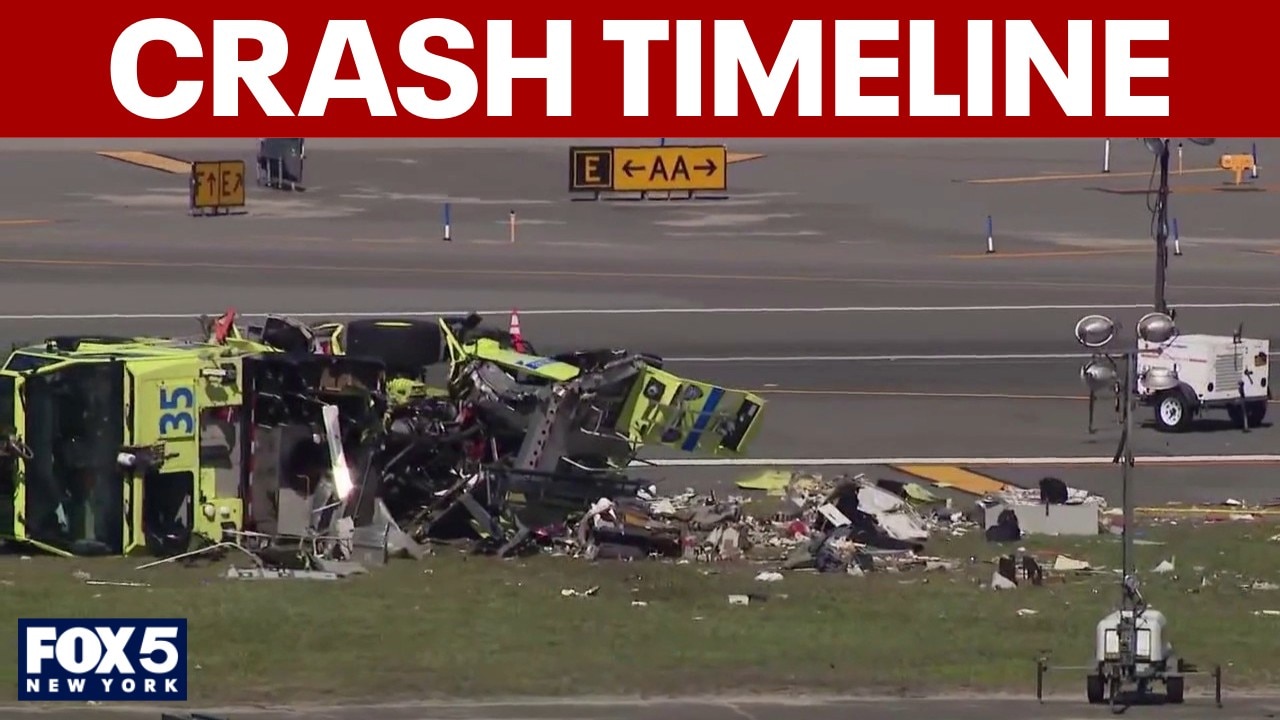
LaGuardia crash timeline as investigators continue to collect evidence
FOX 5 NY's Jessica Formoso and Robert Moses have the latest.
QUEENS - The investigation continues into a deadly runway collision at LaGuardia Airport as federal officials work to piece together the timeline and critical moments leading up to the crash.
What they're saying:
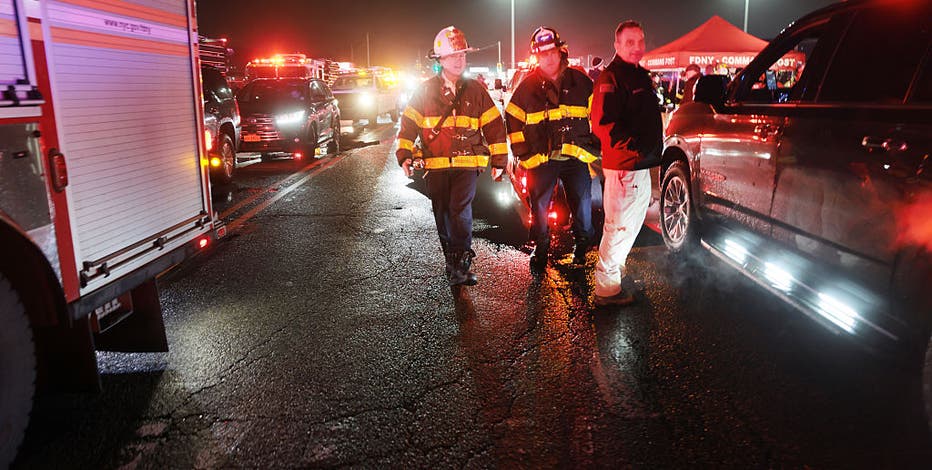
Authorities say two pilots were killed Sunday night when an Air Canada Express flight collided with a Port Authority fire truck on Runway 4, an accident investigators now believe was caused by a series of breakdowns rather than a single failure.
- MORE: Survivor recounts LaGuardia crash: 'I had this moment of wondering, is this it?' | WATCH
- MORE: Listen to air traffic control audio during fatal LaGuardia crash
- MORE: Pilots killed in LaGuardia plane crash identified
- MORE: Surveillance video of LaGuardia Airport collision
The National Transportation Safety Board, which is leading the investigation, said early findings point to issues involving both staffing and technology.
Dig deeper:
According to investigators, the fire truck involved in the crash did not have a transponder, preventing the airport’s surface detection system from tracking its position and issuing a warning of an impending collision.
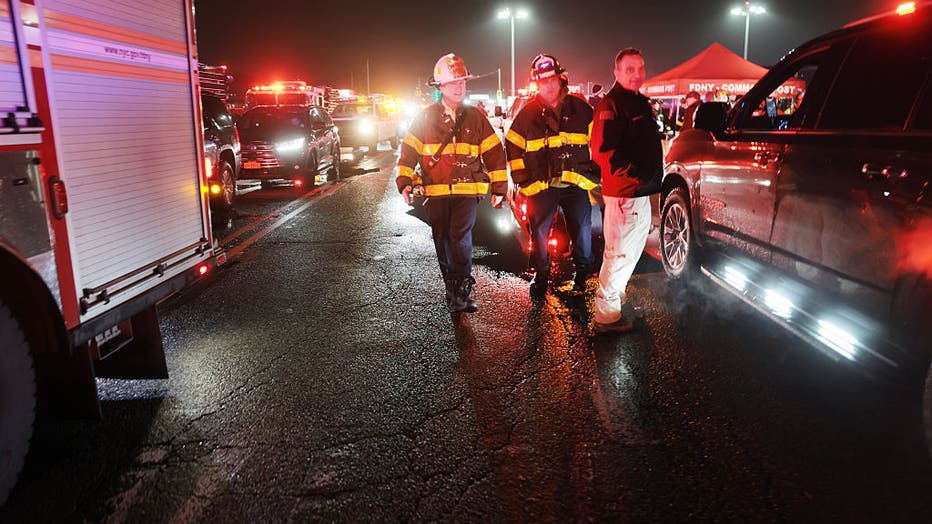
(Photo by Spencer Platt/Getty Images)
Audio recordings from air traffic control show a controller cleared the fire truck to cross the runway about 20 seconds before impact. However, officials say a possible communication signal interference may have prevented the firefighters from hearing urgent instructions to stop.
‘Stop stop stop’
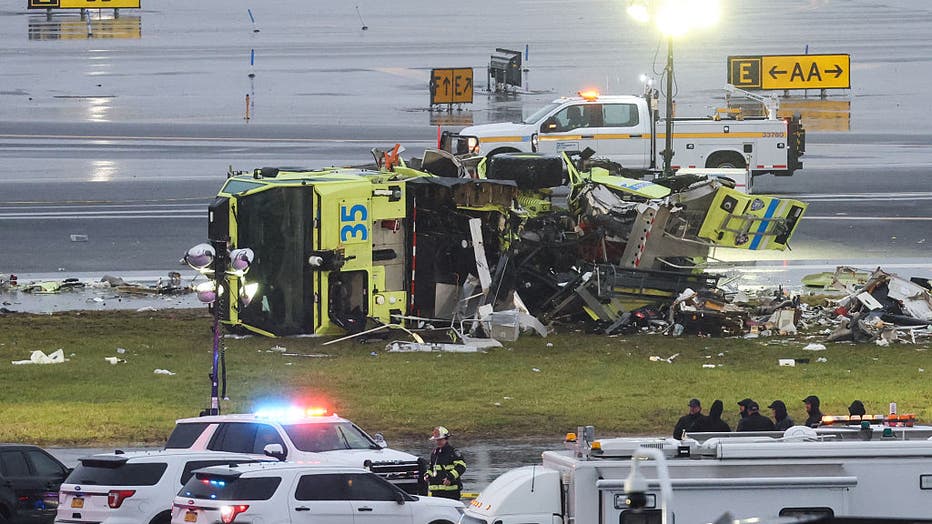
(Photo by TIMOTHY A. CLARY / AFP via Getty Images)
Investigators said the controller began issuing stop commands roughly nine seconds before the crash, but it remains unclear whether those instructions were received.
The NTSB also raised concerns about workload inside the control tower. Only two controllers were on duty at the time, a staffing level officials say is standard for late-night operations but may have been strained due to a backlog of delayed flights.
Officials are now working to determine how responsibilities were divided between the controllers and whether additional personnel should have been available, particularly around a shift change that occurred shortly before the crash.
NTSB crash timeline based on recorder
NTSB details black box transcript from Air Canada Express Flight 8646
Investigators say the emergency vehicle had been cleared to cross the runway to check on another aircraft reporting an odor when the collision occurred.
Timeline:
Preliminary data from the cockpit voice recorder outlines a rapid sequence of events in the final seconds before impact:
Twenty seconds before the crash, the tower cleared the fire truck to cross Runway 4.
Seventeen seconds before impact, the fire truck acknowledged the clearance.
Twelve seconds before the crash, the tower instructed another aircraft to hold position.
Nine seconds before impact, controllers ordered the fire truck to stop.
Eight seconds before the crash, the aircraft touched down.
Six seconds before impact, the first officer transferred control of the plane to the captain for reasons that remain under investigation.
Four seconds before the crash, the tower again ordered the fire truck to stop.
Moments later, the aircraft struck the vehicle.
Listen to air traffic control audio from fatal LaGuardia crash
Newly released air traffic control audio is shedding more light on the moments after the fatal crash at LaGuardia Airport, including a controller saying, "I messed up," as crews scrambled to respond.
Investigators say they are working to determine whether the firefighters heard any of the warnings and why the aircraft crew transferred control in the final seconds.
The NTSB emphasized that aviation safety relies on multiple layers of protection, and accidents of this nature typically involve several failures occurring at once.
In addition to the two pilots killed, 39 people on board the flight were taken to hospitals with injuries. Six remained hospitalized as of the latest update. One firefighter also remained hospitalized.
What's next:
Runway 4 remains closed and is expected to reopen later this week as investigators continue examining the wreckage and interviewing those involved.
The Source: This report is based on information from the NTSB.