

How hurricane forecasting has changed since Katrina

Meteorologist's perspective on Hurricane Katrina
The director of NOAA's National Hurricane Center, Michael Brennan, Ph.D., tells LiveNOW from FOX's Christy Matino why Hurricane Katrina was so devastating, and what we've learned about forecasting since 2005.
MIAMI - Hurricane Katrina remains etched in history as a devastating storm whose catastrophic surge triggered widespread flooding and a humanitarian crisis.
Since then, hurricane forecasting has undergone a dramatic transformation, and in the words of the National Hurricane Center, it has evolved "in almost every way imaginable."
How hurricane forecasting has changed since Hurricane Katrina
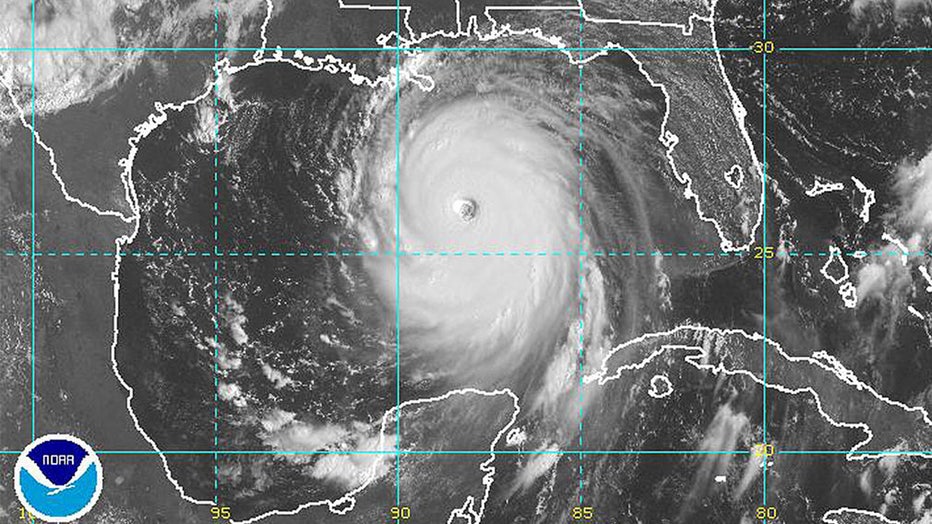
File: In this visible satellite image from NOAA, Hurricane Katrina is seen in the Gulf of Mexico August 28, 2005. (Photo by NOAA via Getty Images)
What they're saying:
Michael Brennan, the director of the National Hurricane Center, told LiveNOW from FOX that the aftermath of Hurricane Katrina and the 2005 hurricane season spurred the development of a whole new generation of hurricane forecasting modeling.
"All the tools we have are better now than they were 20 years ago," Brennan told LiveNOW from FOX. "We have better satellite imagery, we have better observations, we take the observations we get from the Hurricane Hunter aircraft, and we can get them into the forecast models."
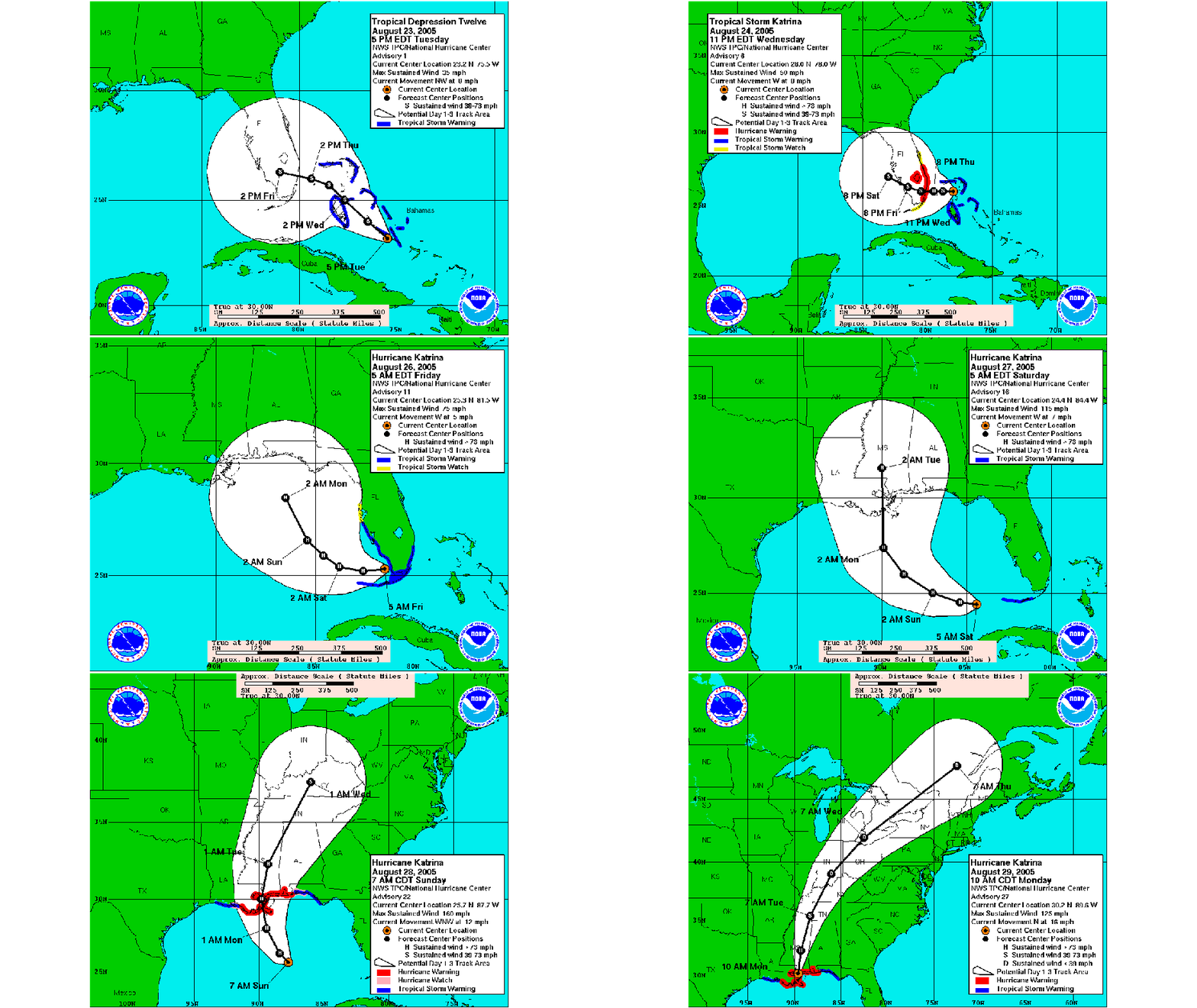
Animation showing the evolution of Hurricane Katrina's forecast track (via NHC/NOAA)
Dig deeper:
Forecasting models including the HWRF and HMON were developed to simulate the inner cores of hurricanes. These models will be retired and decommissioned by NOAA in favor of the next-generation Hurricane Analysis and Forecasting System (HAFS).
"Our intensity forecast errors now are 40 to 50 percent less than they were at the time of Katrina 20 years ago, and we actually now have the ability to try to forecast some of that rapid intensification that we saw happen at that time," Brennan said, noting that forecasters didn’t have the ability to forecast the rapid strengthening of storms, but are now making some significant progress in the area now.

Maps: New Orleans before & after Hurricane Katrina's floods
Over 1,000 people died in Louisiana as a result of Hurricane Katrina. The scope of the flooding – and the days-long struggle of those caught in it – became a defining event for the first part of the century.
How forecasting storm surge has changed
Big picture view:
According to the National Weather Service in New Orleans, the devastation caused by the storm surge of Hurricane Katrina resulted in one of the largest displacements of a population since the Great Depression.
Brennan told LiveNOW from FOX that researchers have additionally come a long way in forecasting storm surge, the magnitude of storm surge and how deep the water can get.
"We have high-resolution mapping that shows people how high the water could get above ground level. And that's really a lot of that was started in the aftermath of Katrina and realized the need to focus on that storm surge predictability aspect," he explained. "But on the the risk standpoint, we've continued to refine the risk mapping and the risk modeling we do for storm surge as we've been able to continue to improve the modeling."
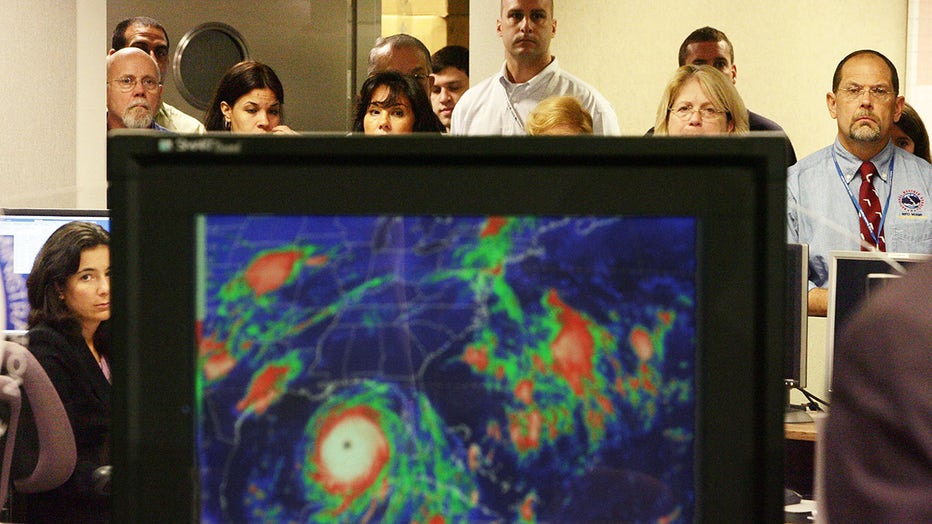
File: Staff members of the National Hurricane Center listen to a press conference by the center's director as they watch from behind a computer screen showing satellite graphics of hurricane Katrina in 2005 at the National Hurricane Center in Miami,
He said the resolution of the modeling has also improved, giving insight into the symmetry and topography of the land, and thus, revealing what the storm surge risk looks like for a given community.
"And that's really the first step into people being prepared, whether it's at the individual level, where do you wanna build your home? Where do you want to live? Do you need some type of insurance? All the way up to the community level and what kind of protections need to be taken by communities or states," he added.

Life during – and after – Hurricane Katrina
In 2005, Hurricane Katrina swamped the Gulf Coast, flooding vulnerable New Orleans and driving millions from their homes. Reporters and residents alike were stranded in the swamped city – all looking for help and answers that, in some cases, never came.
What happened during Hurricane Katrina?
The backstory:
Hurricane Katrina was a Category 3 storm with winds near 125 mph when it slammed into the New Orleans area on Aug. 29, 2005.
Those winds pushed storm surge of between 10 and 30 feet in the region ashore. All that water overtopped or breached levees meant to protect New Orleans.
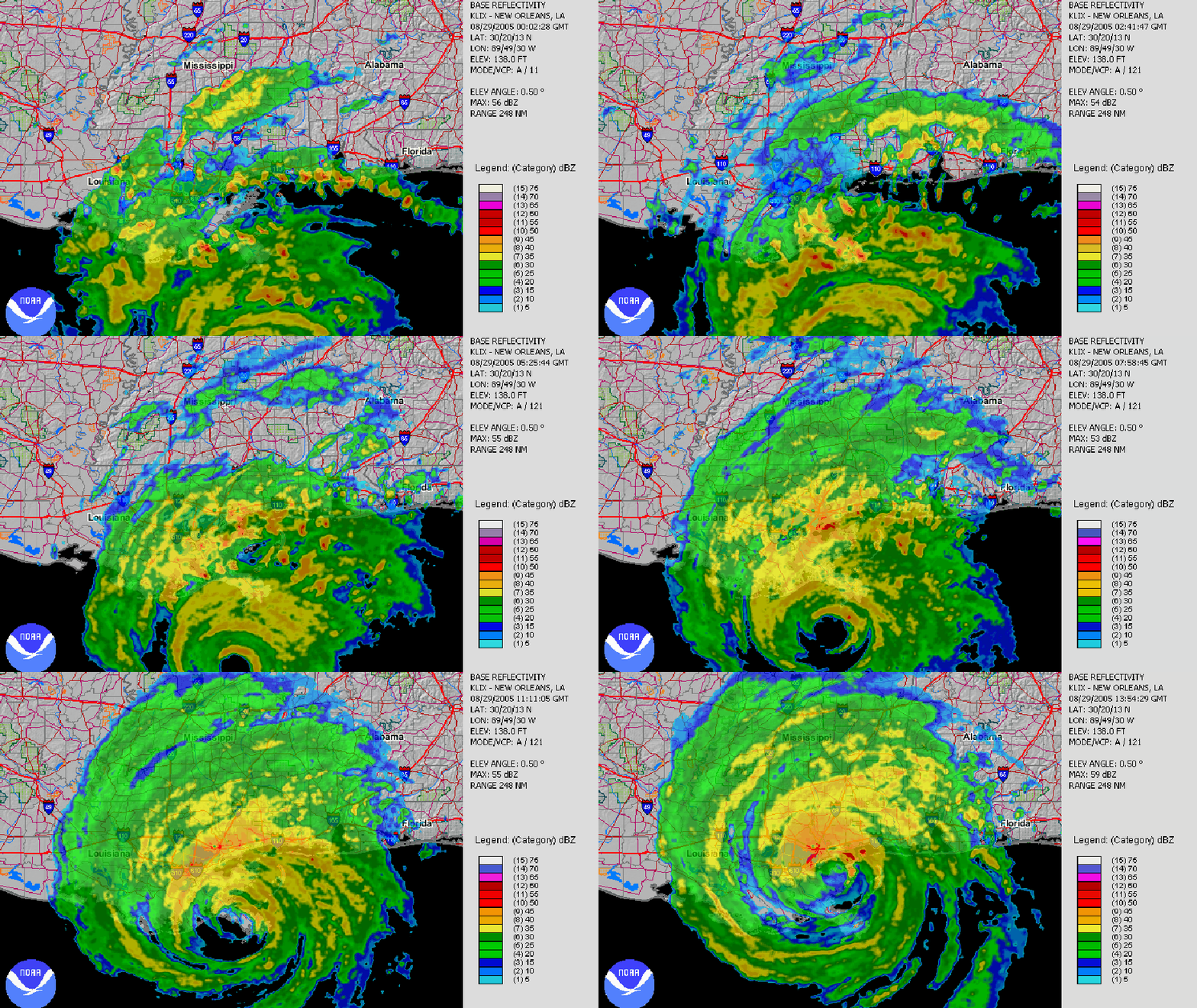
Radar animation NWS via NCEI (formerly NCDC)
In the original post-storm report issued in the months that followed Katrina, NHC officials said deaths from the storm were estimated to be more than 1,800. A majority of those deaths – 341 – happened in Louisiana, and most of those people were over the age of 60.
The Source: The information for this story was provided by an interview with LiveNOW from FOX, which was conducted in August 2025. FOX Weather also contributed. This story was reported from Los Angeles.