

Storms flood NYC roads, shut down trains and flights across the East Coast

NYC subway delays due to power outage: Latest
FOX 5 NY's Stephanie Bertini has the latest on the New York City subway delays and disruptions after a power outage on West Fourth Street.
NEW YORK - Severe thunderstorms and torrential rain slammed the East Coast on Thursday, stranding vehicles, suspending train service, and triggering flash flood warnings from Virginia to Connecticut.
In New York City, streets quickly filled with water, forcing road closures, water rescues, and commuter chaos. Governor Kathy Hochul declared a state of emergency for New York City and surrounding counties, while officials urged residents to stay off the roads and prepare for more rain through Friday.
Editor’s note::
A previous version of this article incorrectly included video of flooding at Grand Central Terminal that was not recorded on Thursday, July 31. The video has been removed.
Flash flooding strands drivers and disrupts mass transit across NYC
What we know:
Major highways like the Clearview Expressway in Queens were shut down due to high water. Train service was suspended in multiple areas, and first responders carried out water rescues in at least two boroughs.
A state of emergency was declared for New York City.
- Flash flood warnings were issued for parts of NYC, New Jersey, and Philadelphia.
- NYC’s major commuter rail lines, including the Long Island Rail Road and routes into New Jersey, experienced widespread suspensions or delays.
- Amtrak shut down train service between Philadelphia and Wilmington due to high water.
- In Queens, NYPD officers pulled multiple people from cars caught in rising floodwaters on the expressway.
- Waterlogged subway and bus service added to commuter delays, as transit officials struggled to keep up with the fast-moving storm.
- Emergency shelters were opened in parts of Maryland and Pennsylvania, and schools and libraries closed early.
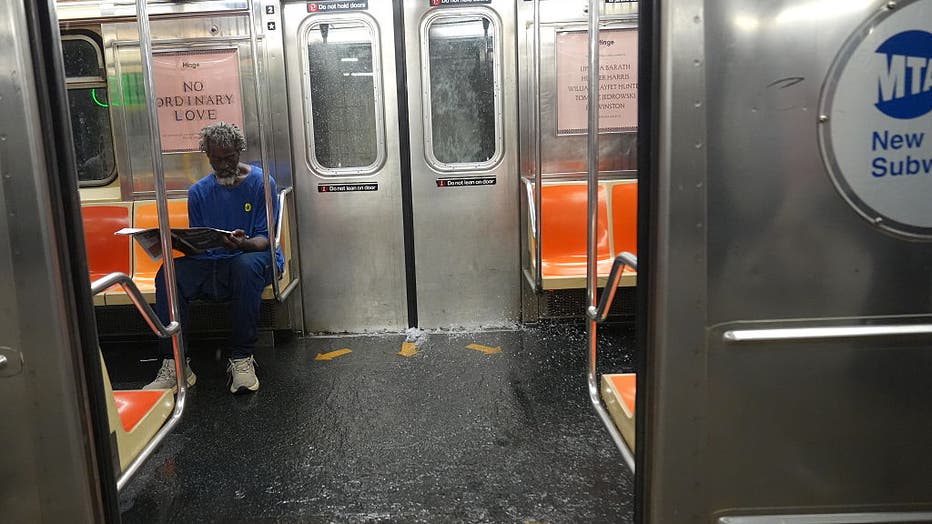
A man reads a newspaper aboard a partially flooded NYC subway car during Thursday’s severe thunderstorms, which triggered flash flood warnings and disrupted transit across the region. (Photo by Selcuk Acar /Anadolu via Getty Images)
What we don't know:
Officials have not confirmed the total number of rescues, injuries, or properties affected by the flooding. The full scope of transportation disruptions and storm-related damage will likely emerge over the next 24 to 48 hours.
- It’s still unclear how many rescues were carried out or the total extent of damage across the region.
- Officials have not yet released a full tally of injuries or property damage from the storm.
- While flash flood warnings in NYC were lifted by Thursday night, forecasters say more rain could hit the East Coast through Friday morning.
By the numbers:
Several locations across the tri-state area saw 2 to 3 inches of rain fall in under an hour, with some forecasts calling for 4 to 6 inches total by Friday.
Thousands of power outages were reported, and air travel faced dozens of delays and cancellations at NYC-area airports.
- Some areas in New York and New Jersey received up to 3 inches of rain in just an hour.
- Flooding was forecast to reach 4 to 6 inches in parts of the mid-Atlantic.
- As of Thursday evening, more than 14,000 utility customers in New Jersey were without power.
- Dozens of flights were delayed or canceled at major airports including JFK, LaGuardia, Newark, and Philadelphia.

NY News Update: NYC Flood Watch; funeral for officer killed in Midtown shooting
In this FOX 5 NY News Block, severe flooding is possible in the New York City area later today. Also, a funeral was held for Officer Didarul Islam, the fallen NYPD officer who was killed in the Midtown mass shooting.
Big picture view:
The National Weather Service placed major cities from D.C. to New York on a Level 3 out of 4 flood risk, with warnings that localized flooding could happen quickly, especially in areas with poor drainage.
Videos shared on social media showed intense scenes: commuters trudging through flooded subway stations, firefighters escorting passengers from trains, and roads that disappeared under rushing water.
In Reading, Pennsylvania, storm drains overflowed and vehicles were nearly fully submerged. Maryland officials preemptively shut down vulnerable roads and issued flood watches across the state.
While tornado warnings in parts of New Jersey passed without reports of touchdowns, the overall storm system demonstrated the rising frequency and intensity of East Coast flash flood events, especially during summer heat waves.
The Source: This story is based on reporting from the Associated Press, the National Weather Service, statements from New York state and city officials, and on-the-ground coverage from FOX 5 New York.