

Daylight Saving Time 2026: Here's when the time will change this weekend
When is daylight saving time?
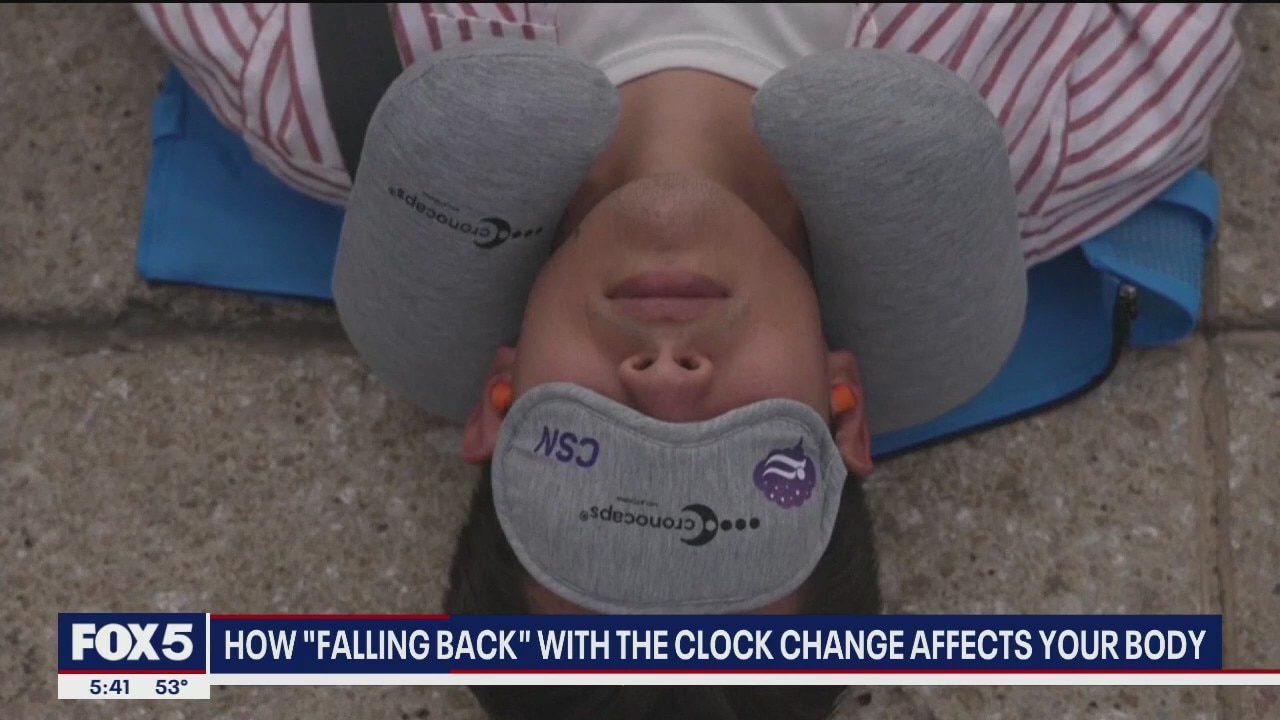
As clocks fall back this Sunday, new Stanford research suggests switching between daylight saving and standard time may disrupt our natural body rhythms. Experts say sticking with one, especially permanent standard time, could better align with our biology and improve overall well-being.
NEW YORK - Millions across the Tri-State area will move their clocks ahead one hour at 2 a.m. on Sunday, March 8, 2026, as daylight saving time begins.
What we know:
The shift means more evening sunlight for New York, New Jersey and Connecticut and the return of 7 p.m. sunsets across the region as spring approaches.
While we’ll lose an hour of sleep, we’ll gain brighter, longer evenings as the days stretch toward summer.
Featured
Daylight saving time: NY waiting on these 5 states to make it permanent
As daylight saving time approaches, the argument to make it permanent in the United States has resurfaced yet again.
Is it daylight saving time or daylight savings time?
It’s daylight saving time, not daylight savings time — although the latter is a common mistake.
When does daylight saving time start in 2026?
Daylight saving time begins Sunday, March 8, 2026. The change officially takes effect at 2 a.m., when clocks "spring forward" by one hour.
If you rely on your smartphone as an alarm, you likely won’t need to do anything — most devices adjust automatically. But analog clocks and some digital clocks that aren’t connected to Wi-Fi will need to be set ahead manually before bed Saturday night.
In the New York metro area, residents can expect roughly 80 additional minutes of total daylight by the end of March. With the daylight saving adjustment, sunsets will occur about 100 minutes later at the end of the month compared with the beginning.
When does daylight saving time end in 2026?
Daylight saving time will end Sunday, Nov. 1, 2026, when clocks "fall back" one hour at 2 a.m.
How did daylight saving time start?
In the 1890s, New Zealand astronomer and entomologist George Vernon Hudson proposed shifting clocks in the spring and fall to increase usable daylight. In the early 1900s, British builder William Willett made a similar push, arguing that more people should take advantage of morning sunlight. Neither proposal initially gained traction.
Germany became the first country to adopt daylight saving time during World War I as a way to conserve energy. Other nations, including the United States, followed.
Which states observe daylight saving time?

Tips on adjusting to the daylight saving time change
NYU Langone's Dr. Ayala Wegman shares tips for adults and kids about adjusting to the daylight saving time change.
In 1966, Congress passed the Uniform Time Act, allowing states to observe daylight saving time or opt out, as long as they apply it statewide. The law also standardized the start and end dates.
Today, every U.S. state except Hawaii and most of Arizona observes daylight saving time. Internationally, much of Europe, parts of Canada and Australia follow the practice, while most of Asia and Russia do not.
Could the U.S. make daylight saving time permanent?
The U.S. tried year-round daylight saving time during the 1970s energy crisis, but it was unpopular because winter sunrises came as late as 9 a.m. in some places, leaving kids and commuters in the dark. Supporters say permanent daylight saving would mean more evening light, while others argue permanent standard time is safer and better for sleep. Any nationwide change would require action by Congress or the Secretary of Transportation.
Where does New York stand?
New York lawmakers have introduced legislation to make daylight saving time permanent, but it has stalled in the state Senate. For it to take effect, Connecticut, Massachusetts, New Jersey, Pennsylvania and Vermont would also need to pass similar laws.
So far, none of those states have enacted the change.
The Source: This report is based on information from the Associated Press.