

‘Stop, stop, stop’: Firefighter heard warning before deadly LaGuardia crash, NTSB report says
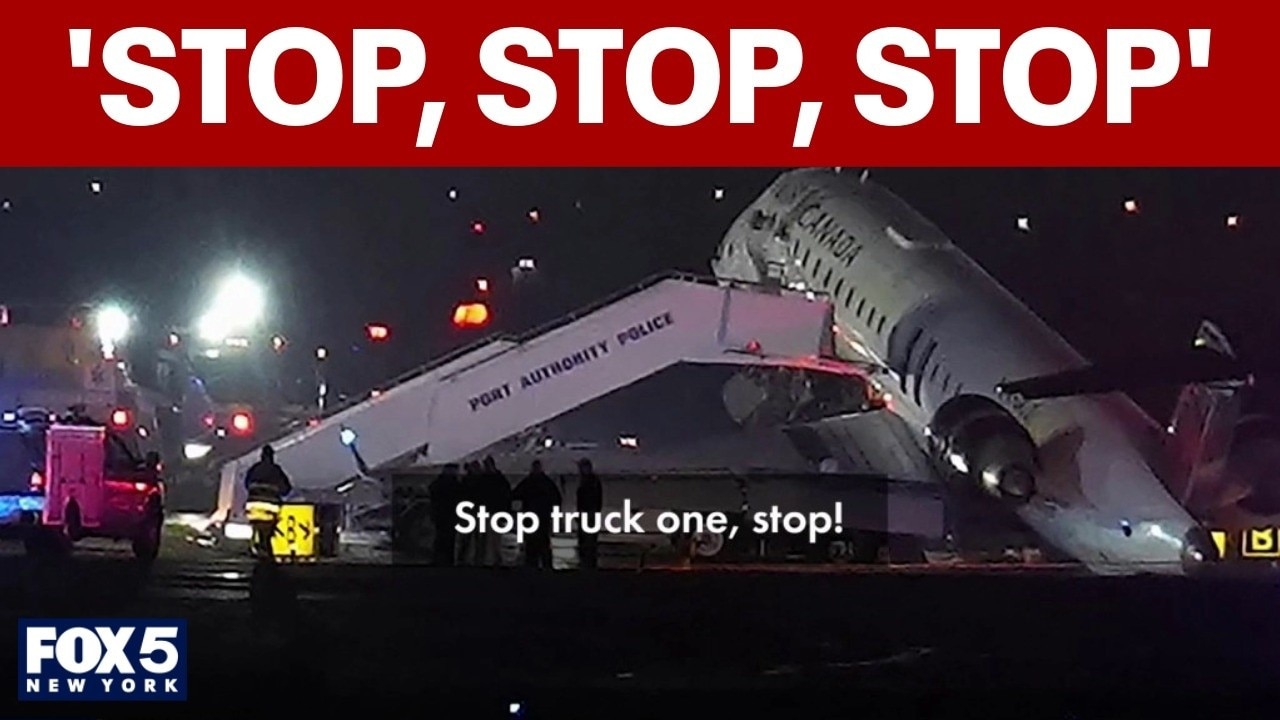
QUEENS - A newly released federal report is shedding light on the final moments before a deadly runway collision at New York’s LaGuardia Airport.
What we know:
A firefighter driving a truck involved in the March 22 crash heard an air traffic controller warn "stop, stop, stop," but did not initially realize the instruction was meant for the vehicle, according to the Associated Press, citing a preliminary report from the National Transportation Safety Board.
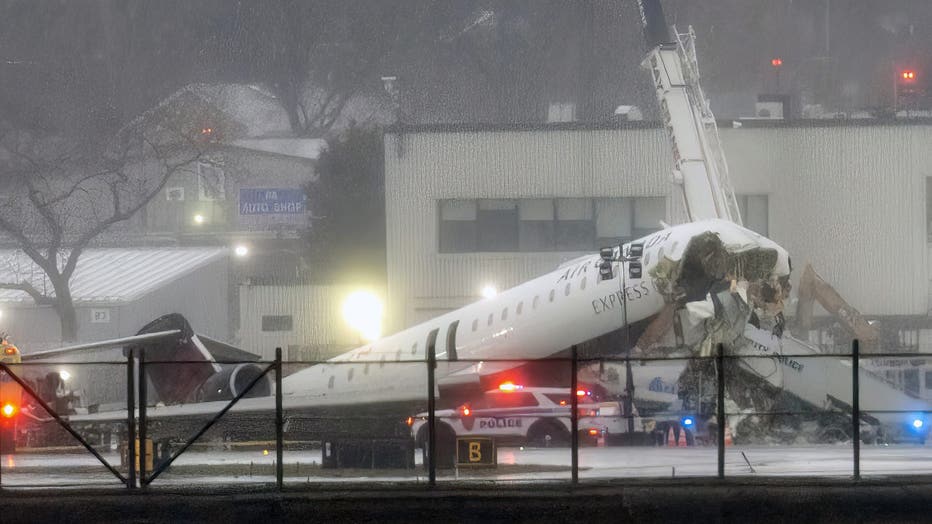
An Air Canada Express CRJ-900 sits on the runway at LaGuardia Airport on March 23, 2026. The pilot and co-pilot of the Air Canada jetliner were pronounced dead after their aircraft smashed into a Port Authority truck on the runway as they tried to ta
RELATED: Pilots killed in LaGuardia plane crash identified
The crash happened when Air Canada Express Flight 8646 struck the fire truck while landing on Runway 4, killing both pilots, Antoine Forest and Mackenzie Gunther.
The plane, a CRJ900 regional jet arriving from Montreal, had more than 70 people on board. About 40 people, including the two people in the fire truck, were taken to hospitals. A flight attendant survived after being thrown onto the tarmac while still strapped into her seat.
Timeline:
An air traffic controller cleared the fire truck to cross the runway about 12 seconds before the plane touched down at around 11:35 p.m.
After the initial warning, the truck’s turret operator later heard the controller say, "Truck 1, stop, stop, stop," and realized the instruction was directed at them. By that point, the truck was already on the runway and the aircraft was approaching at landing speed.
As the truck turned, the operator saw the airplane’s lights coming down the runway moments before impact, the AP reported.
What we don't know:
It remains unclear why the warning was not immediately understood or acted upon by the fire truck crew.
Investigators are also examining why safety systems designed to prevent such incidents failed to provide timely alerts.
The Port Authority of New York and New Jersey responded to the NTSB's report on Thursday, saying that they are also conducting their own investigation into the crash.
"We appreciate the NTSB’s work and the speed with which they’ve released this preliminary report," Port Authority COO James Allen said. "We’re conducting a comprehensive review of the initial findings and investigative materials. Our focus is straightforward: ensure our safety procedures and protocols are as strong as they can be and take action to strengthen them as needed."
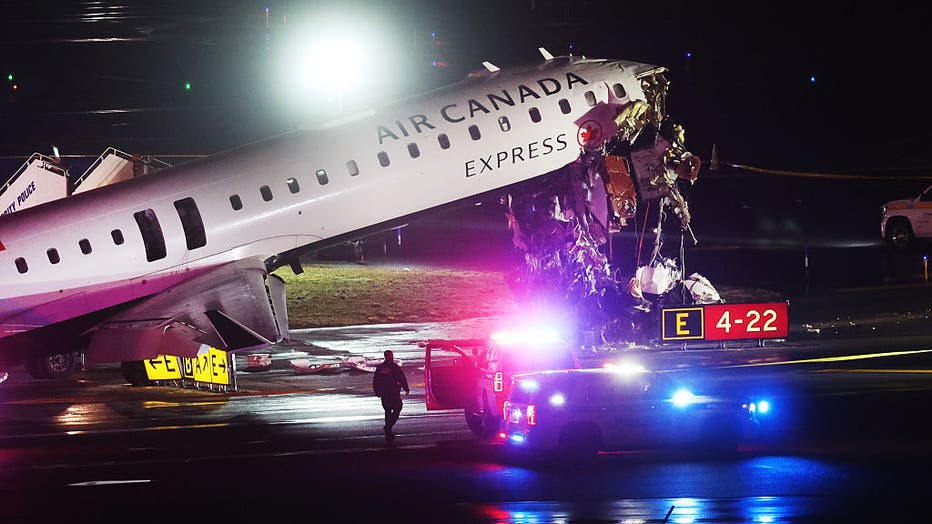
NEW YORK, NEW YORK - MARCH 23: An Air Canada Express plane sits on the tarmac after it collided with a fire truck on the tarmac at LaGuardia Airport on March 23, 2026 in New York City. Two people are believed to have been killed in the late-night acc
Why safety systems didn’t prevent the crash
A crash prevention system used by air traffic controllers did not generate an audio or visual warning ahead of the collision, according to the Associated Press.
Runway lights that act like stop signals for crossing traffic remained on until about three seconds before the crash.
The airport’s advanced surface surveillance system, known as ASDE-X, also did not function as intended. The fire truck was not equipped with a transponder, and the presence of multiple emergency vehicles traveling closely together may have prevented the system from triggering an alarm.
The backstory:
The fire truck was part of a convoy responding to an emergency involving a strong odor reported on a United Airlines flight. The convoy included six vehicles: four fire trucks, a stair truck, and a police vehicle.
At the time, LaGuardia’s control tower was handling heavier-than-normal traffic due to earlier flight delays. Arrivals and departures after 10 p.m. were more than double what had been scheduled, according to data from aviation analytics firm Cirium cited by the AP.
Planes were landing every few minutes, with about a dozen arrivals in the 40 minutes leading up to the crash, while controllers were also coordinating the emergency response.
What's next:
The NTSB’s investigation remains ongoing, and additional findings are expected as investigators continue to examine system performance, communication, and procedures leading up to the crash.
The Source: This article was written using information from the Associated Press.