

Strait of Hormuz closed in response to Israeli attack, local reports say
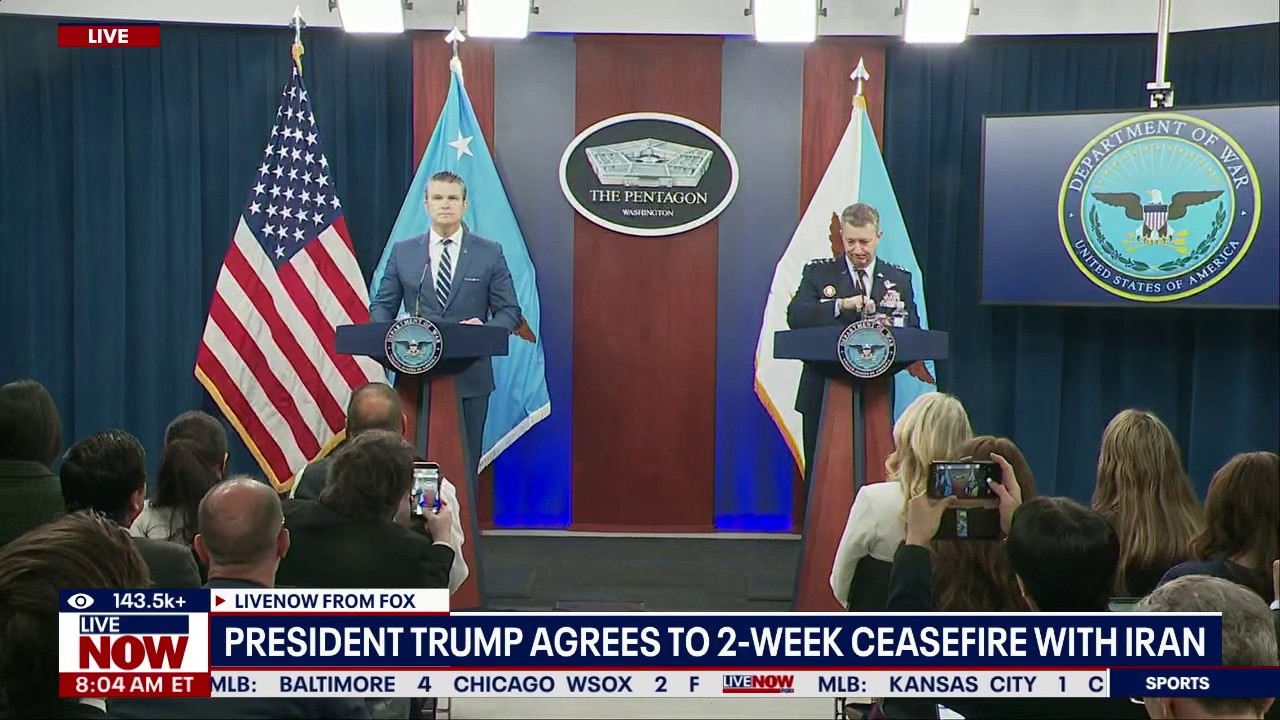
Sec. Hegseth, Chairman Caine give update on Epic Fury
Secretary of War Pete Hegseth and Chairman of the Joint Chiefs of Staff General Dan "Razin" Caine held a press briefing at the Pentagon Wednesday to provide an update on Operation Epic Fury and the two-week ceasefire agreement President Trump reached with Iran.
Iran and the United States have agreed to a two-week ceasefire. The deal allows President Donald Trump to pull back from his Tuesday threat where he said a "whole civilization will die" if a deal wasn't reached. However, some attacks in Iran and Gulf Arab countries continued Wednesday.
Prior to the strikes on Wednesday, both sides presented different terms of the deal. Iran said the deal would allow them to charge ships passing through the Strait of Hormuz, but terms were not clear. It was unclear if any other country agreed to this condition.
Pakistan, who helped mediate the deal, said fighting would stop in Lebanon. Israel launched a ground invasion there against the Iran-backed Hezbollah militant group. Israel did not agree to stop there.
It is also unclear what would happen with Iran's missile and nuclear program. Their missile and nuclear program was a main objective for U.S. and Israel when they started the conflict.
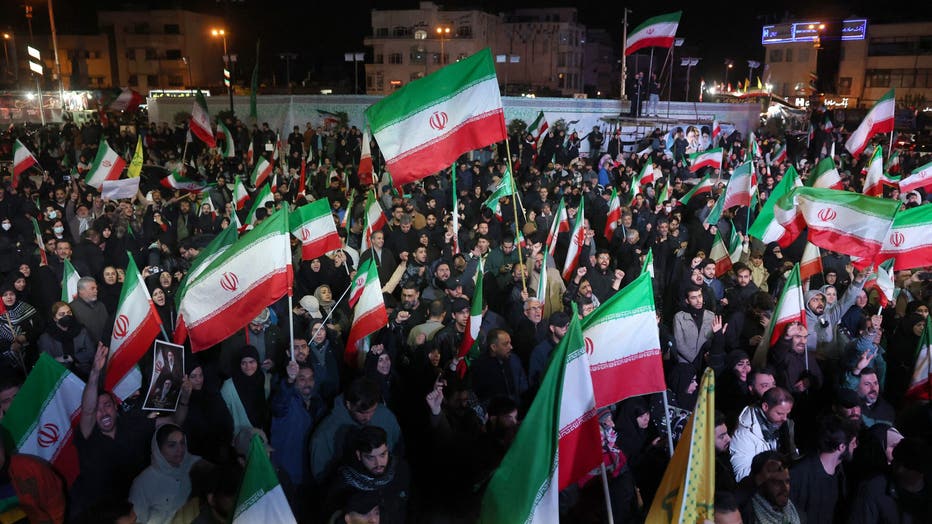
Iranians react after a ceasefire announcement at the Enqelab square, in Tehran, on April 8 2026. (Photo by AFP via Getty Images) /
Here’s a look back at what happened on Wednesday:
The ceasefire requires a "free" reopening of the Strait of Hormuz
3:15 p.m. ET: At a White House press briefing Wednesday, Press Secretary Karoline Leavitt said the ceasefire is subject to no tolls through the Strait of Hormuz.
Leavitt referenced President Trump's social media post stating the agreement was conditional on the "COMPLETE, IMMEDIATE, and SAFE OPENING" of the strait.
Iran closes Strait of Hormuz in response to Israeli attack
12:45 p.m. ET: Iran closed the Strait of Hormuz in response to Israeli attacks on Lebanon, Iranian state media reported.
Details about the attack and the closure are developing.
President Trump discusses ceasefire in-person talks
12:15 p.m. ET: President Donald Trump said in-person talks about the ceasefire with Iran will happen "very soon" but did not say specifically where and when.
Trump said in an interview with the New York Post, that at least Steve Witkoff and Jared Kushner will be included. He was not sure about the status of JD Vance being there due to safety issues.
Lindsey Graham looking to hear from vice president on details of the ceasefire
11:05 a.m. ET: Sen. Lindsey Graham said on social media he is looking to hear from Vice-President Vance on details of the ceasefire.
Graham said he prefers a diplomatic solution, but there were some troubling aspects of the negotiating document that led to the proposal.
He additionally made it a point to agree with the president about removing the uranium from Iran and handing it over to the U.S. as part of the agreement.
"Allowing this regime to enrich in the future would be an affront to all those murdered by the regime since this war started and would be inconsistent with denying Iran a pathway toward a bomb in the future," Graham said. "That is why I strongly support President Trump’s statement today: no enrichment for Iran."
Graham is hoping Vance and the other architects of the agreement come to Congress and explain how the deal "meets America's national security objectives."
Iran strikes, by the numbers
10:30 a.m. ET: Gen. Dan Caine said over 13,000 targets have been hit since the U.S. and Israel began military operations in Iran. That includes 80% of Iran's air defense systems that have been destroyed and 90% of their weapons factories that have been attacked.
At the Wednesday press briefing, Caine also said 150 ships, or 90% of Iran's regular naval fleet, had been sunk.
As far as U.S. forces, Caine said the operation consumed more than "6 million meals, more than 950,000 gallons of coffee and 2 million energy drinks, and a lot of nicotine."
Tariff on any nation to sell weapons to Iran
9:35 a.m. ET: President Trump says any nation that gives weapons to Iran will immediately face a 50% tariff on any goods sold to the United States.
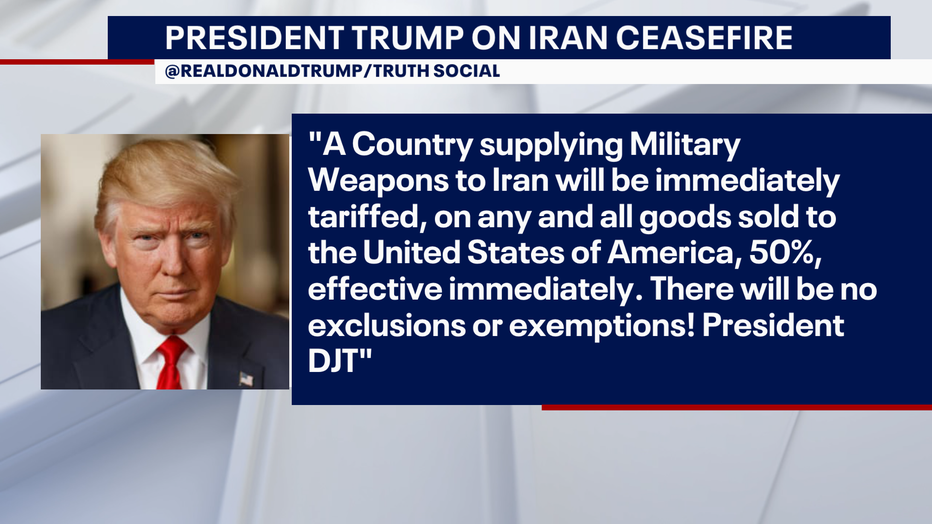
President Donald Trump via Truth Social
President Trump gives some details on the agreement
9:15 a.m. ET: President Trump says the United States will work closely with Iran during their regime change.
In a social media post, Trump said that there will be no enrichment of uranium and the two countries will work together to dig up and remove all of Iran's buried nuclear "dust" that the U.S. has been tracking.
The president also said the deal may include some tariff and sanction relief with Iran.
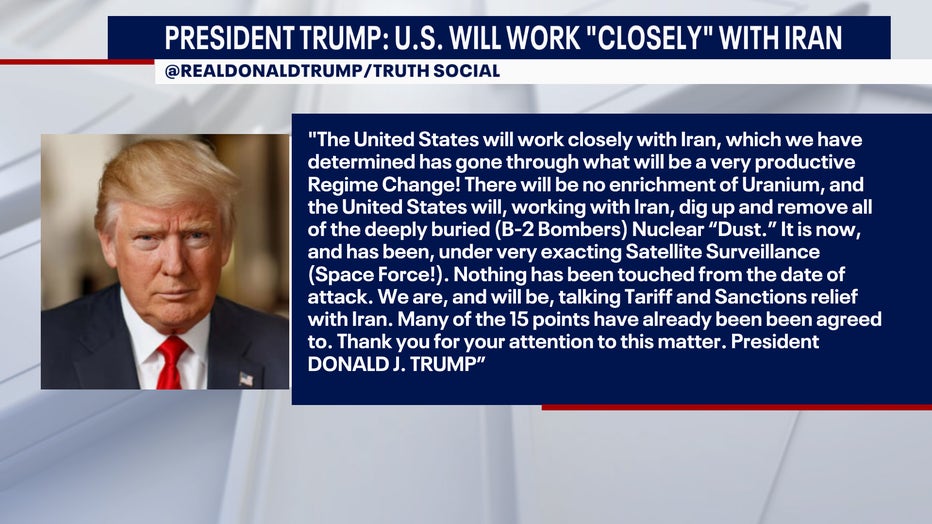
President Donald Trump via Truth Social
Administration clarifies objective for war in Iran
8:45 a.m. ET: In a news conference held at the Pentagon Wednesday, chairman of the Joint Chiefs of Staff, Dan Caine said the U.S. military had three objectives: to destroy Iran's ballistic missile and drone capabilities, destroy its navy, and destroy its defense industrial base
Different members of the Trump administration have also given different objectives over the past month since the war with Iran began.
Officials have also said they sought to eliminate Iran's air force, block Iran's path to a nuclear weapon, cut off support for its proxy groups, and protect allies in the region.
Pentagon to give update on Operation Epic Fury
8 a.m. ET: The Pentagon will hold a briefing with Secretary Pete Hegseth and Joint Chiefs of Staff Chairman, Gen. Dan Caine on Operation Epic Fury.
Vice-President Vance: A "fragile truce"
6:35 a.m. ET: Hours after a two-week ceasefire agreement to stop the war in Iran was announced, U.S. Vice President JD Vance called the ceasefire agreement "a fragile truce" but did not go into detail.
Vice-President Vance spoke at an event in Hungary. The deal was supposed to include plans for a ceasefire and reopening the Strait of Hormuz but the deal was being misrepresented in Iran
"You have people who are lying about even the fragile truce that we’ve already struck," Vance said.
US and Iran reach 2-week ceasefire deal
Dig deeper:
On Tuesday Trump said he’d be pulling back on his threats to widen attacks on Iran.
Trump’s latest threat over the Iran war hit a new extreme earlier Tuesday when he warned, "A whole civilization will die tonight, never to be brought back again," if Iran failed to make a deal that includes reopening the vital Strait of Hormuz.
Both the president and Iran stated that after a conversation with Pakistan’s Prime Minister Shehbaz Sharif and Gen. Asim Munir, Pakistan’s power army chief, a ceasefire deal was reached that would postpone attacks for two weeks.
Oil prices plunge
Big picture view:
U.S. crude oil prices sank 18% following the 2-week ceasefire deal reached between the U.S. and Iran on Tuesday.
Brent crude oil futures fell about 6% to $103.40.
Why you should care:
Many Americans will likely be wondering when the prices at the pump will also plunge, but it won’t happen instantly.
Patrick De Haan, GasBuddy’s head of petroleum analysis, said gas price averages could fall below $4 within one or two weeks. But this is all subject to change, De Haan added.
The Source: Information for this article was taken from The Associated Press and previous reporting by LiveNOW from FOX. This story was reported from San Jose and Orlando.