

The first day of fall in the Northeast: A look at the autumn equinox
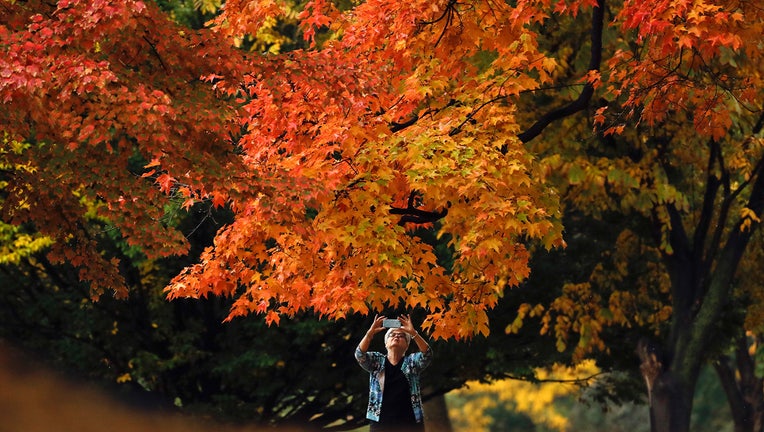
Margaret Gould of Whittier, Calif., photographs the fall foliage in Washington Park on Thursday, Oct. 20, 2016, in Albany, N.Y. (AP Photo/Mike Groll)
NEW YORK - As summer winds down, the official start of fall is just days away. For the Northeast, the first day of fall will arrive this Monday, bringing with it a change in daylight and a new season of weather.
First day of fall
The astronomical start of a season is based on the position of the sun in relation to the Earth. The fall equinox, also known as the autumnal equinox, is the moment the center of the sun crosses the plane of Earth's equator. This will occur on Monday, September 22, 2025, at 2:19 p.m. EDT.
The term "equinox" comes from Latin words meaning "equal night," and it is the only time of the year when both the North and South Poles are lit by sunlight at the same time.
Astronomical Fall vs. Meteorological Fall
The dates of the astronomical seasons can change slightly from year to year due to the Earth’s tilted axis and its orbit around the sun, according to NASA. This is different from meteorological seasons, which are divided into three-month periods based on the annual temperature cycle. Meteorological fall is considered to have started on September 1 and runs through November 30, which more closely aligns with the expected seasonal weather.
A tree with colorful leaves in the fall.
The fall equinox marks the beginning of the shift towards winter, as the amount of darkness in the Northern Hemisphere begins to outweigh the daylight. The leaves will change colors, the animals' coats will thicken and birds will fly south as the temperatures get cooler.
So, grab that pumpkin spice and a comfortable flannel – the season for bonfires and apple picking is right around the corner.
The Source: This article is based on information from NASA and the Farmer's Almanac.