

Iranian regime appears 'intact but largely degraded,' Gabbard tells Congress
Top national security officials in the Trump administration will testify before Congress in back-to-back hearings Wednesday and Thursday as lawmakers grill them on the war in Iran.
The first hearing before the Senate Intelligence Committee Wednesday included Director of National Intelligence Tulsi Gabbard, CIA Director John Ratcliffe, FBI Director Kash Patel, National Security Agency (NSA) chief Lt. Gen. William Hartman, and Defense Intelligence Agency (DIA) Director Lt. Gen. James Adams.
You can watch the first hearing in the video player above. Here’s the latest:
What did Tulsi Gabbard say?
What they're saying:
Tulsi Gabbard, the director of national intelligence, said the Iranian regime "appears to be intact but largely degraded."
"The regime in Iran appears to be intact but largely degraded due to attacks on its leadership and military capabilities," she said in her opening statement. "Its conventional military power projection capabilities have largely been destroyed, leaving limited options. Iran's strategic position has been significantly degraded."
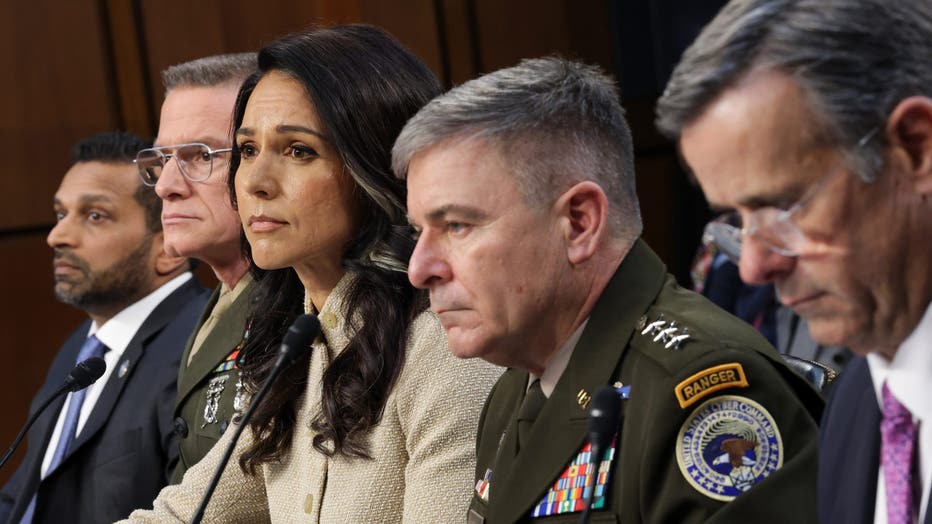
(L-R) Federal Bureau of Investigation Director Kash Patel, Director of the Defense Intelligence Agency (DIA) Lt. Gen. James Adams III, Director of National Intelligence Tulsi Gabbard, Army Lt. Gen. William Hartman and Central Intelligence Agency Dire
"Even so, Iran and its proxies remain capable of and continue to attack U.S. and allied interests in the Middle East. The IC assesses that if a hostile regime survives, it will seek to begin a yearslong effort to rebuild its missiles and UAV forces."
Gabbard was pressed on whether she had advised President Donald Trump that Iran was likely to block the Strait of Hormuz if attacked. The U.S.-Israeli attacks on Iran have effectively stopped oil tanker movement in the Strait of Hormuz – where 20% of the world’s oil passes through daily – and led major producers to cut oil production in the Middle East. That's led to a sharp spike in gas prices here in the U.S. Commercial ships carrying critical cargo like pharmaceuticals and computer chips are also stalled in the region.
Gabbard repeatedly deflected questions about the intelligence she had offered the Republican president. That exasperated Democrats who were trying to extract answers about a widening conflict in the Middle East.
She sidestepped when asked by Virginia Sen. Mark Warner, the top Democrat on the Senate Intelligence Committee, whether she had advised Trump that Iran would attack Gulf nations and shut down the strait if the country was targeted by U.S. strikes.
"I have not and won’t divulge internal conversations. I will say that those of us within the intelligence community continue to provide the president with all of the best objective intelligence available to inform his decisions," she said.
When are the hearings?
Timeline:
The hearings begin Wednesday in the Senate and will continue Thursday in the House.
RELATED: Live updates: Iran confirms security chief killed amid launch of more strikes
Who’s testifying?
Director of National Intelligence Tulsi Gabbard, CIA Director John Ratcliffe, Defense Intelligence Agency Director Lt. Gen. James H. Adams, and FBI Director Kash Patel are among the officials expected to appear before the U.S. House and Senate intelligence committees.
What are they testifying about?
Dig deeper:
The hearings are likely to cover recent intelligence assessments about Iran, including one that showed U.S. strikes are unlikely to result in a regime change in Tehran, and another that cast doubt on claims Iran was preparing to strike first.
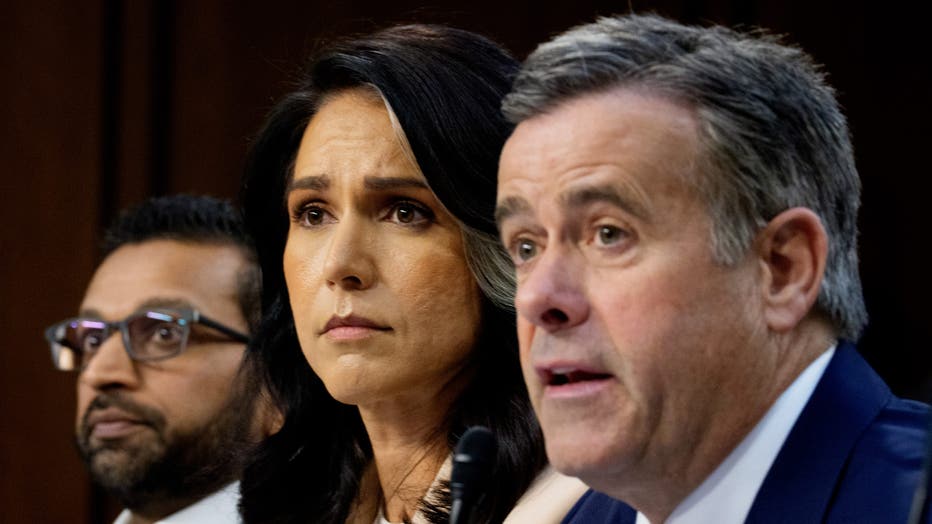
Central Intelligence Agency Director John Ratcliffe (R), accompanied by FBI Director Kash Patel (L), and Director of National Intelligence Tulsi Gabbard (C), speaks during a Senate Committee on Intelligence Hearing on March 25, 2025 in Washington, DC
The testimony will also focus on the outdated intelligence that likely led to a U.S. missile hitting an elementary school in Iran and killing over 165 people. The outdated targeting data was reported to have come from the Defense Intelligence Agency.
Committee members will also likely delve into internal administration debate over the war given the resignation this week of Joe Kent as director of the National Counterterrorism Center. Kent said Tuesday that he could not "in good conscience" back the Trump administration’s war and that he did not agree that Iran posed an imminent threat to the U.S.
Gabbard, whose office oversaw Kent’s work and who is expected at the hearings this week, wrote hours later in a carefully worded social media post that it was up to Trump to decide whether Iran posed a threat. She did not mention her own views of the strikes.
Terrorist threats growing in US
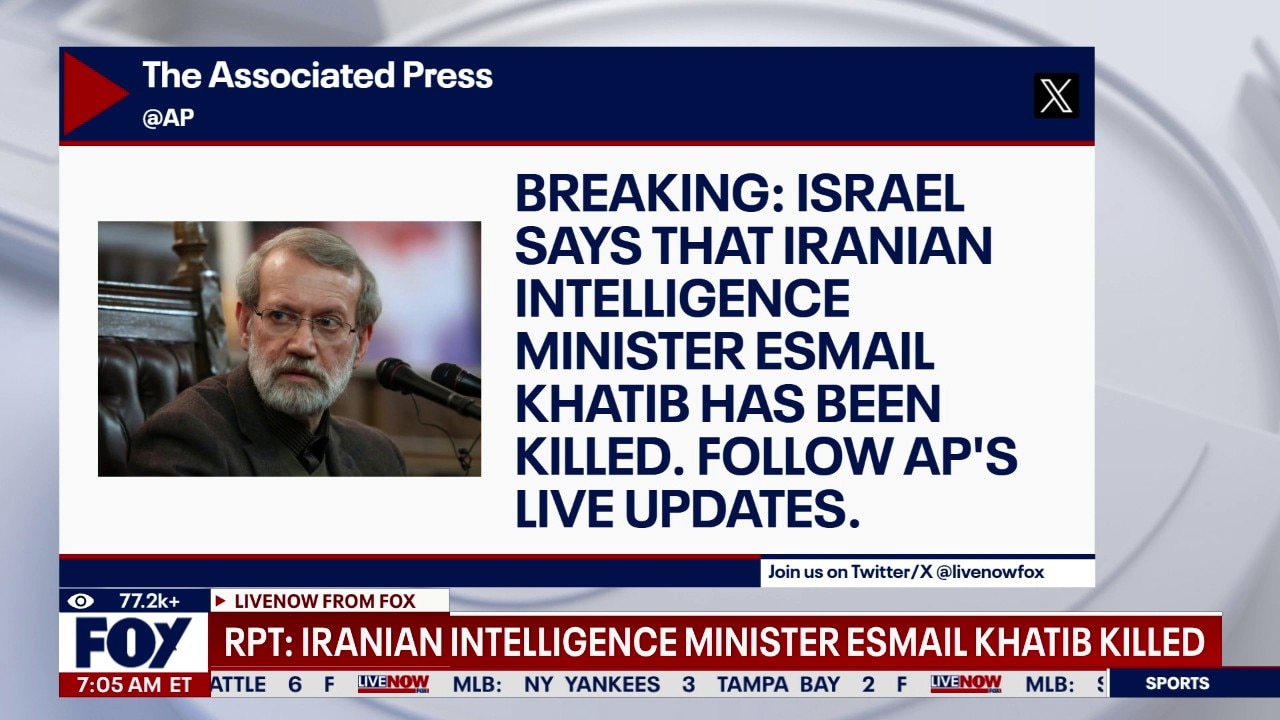
Iranian intelligence leader killed
Israel has killed Iranian Intelligence Minister Escmail Khatib, This comes after two other leaders were killed in operations less than 24 hours before Khatib's death was confirmed.
The backstory:
In the U.S., the FBI has responded to several acts of terrorism since the war in Iran started. A gunman wearing clothes with an Iranian flag design and the words "Property of Allah" killed two people at a Texas bar; two men who authorities say were inspired by the Islamic State were arrested on charges of bringing homemade powerful explosives to a protest outside the New York City mayoral mansion; a man with a past terrorism conviction opened fire inside an Old Dominion University classroom in Virginia; and a Lebanese-born man in Michigan drove his car into a synagogue.
The Source: This article includes information from The Associated Press and previous FOX Local reporting.