

Lyrid meteor shower peaks soon: When to look up
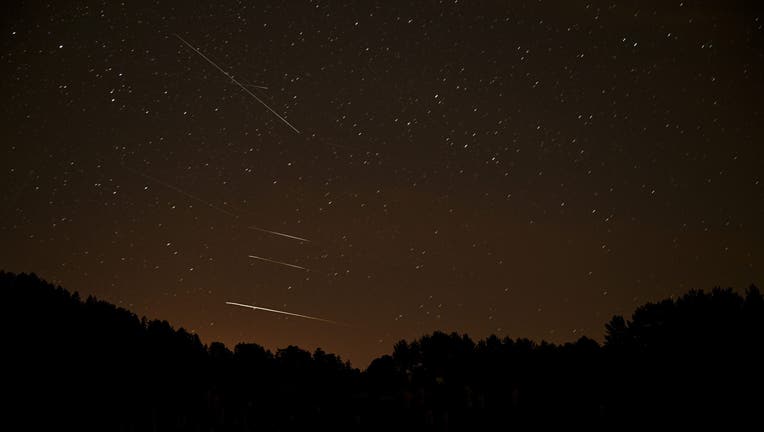
Lyrids meteor shower is observed in Karagol Geosite in Kizilcahamam district of Ankara, Turkiye on April 22, 2025. (Photo by Utku Ucrak/Anadolu via Getty Images)
Stargazers, get ready to watch one of the world’s oldest known meteor showers as the Lyrid meteor shower peaks next week.
Here’s what to know:
When does the Lyrid meteor shower peak?
Timeline:
The meteor shower officially started on April 14, but peaks Tuesday night, April 21, into Wednesday morning.
There’s no risk of the crescent moon photo-bombing the Lyrid shower this year. It’s dimmer and will set before the fun starts.
How and where to see the Lyrid meteor shower
Local perspective:
The show will be visible across the globe, but views will be best in the Northern Hemisphere.
RELATED: Over the moon: Watch Astronaut Christina Koch reunite with dog after lunar mission
To see the Lyrids, go outside after midnight and venture away from tall buildings and city lights. It’ll take at least 15 to 30 minutes for your eyes to adjust to the nighttime sky and remember to resist looking at your phone.
Bring lawn chairs or a sleeping bag and be patient until the meteors reveal themselves. They’ll appear to come from the constellation Lyra in the northeastern sky.
RELATED: What happened to Apollo 13? 'Houston, we've had a problem'
What they're saying:
"A meteor looks like a trail of light in the sky. What you tend to detect is the motion against the background," San Diego City College astronomer Lisa Will told The Associated Press.
What is the Lyrid meteor shower?
The backstory:
The Lyrids originated from the dusty trail left behind by comet C/1861 G1 Thatcher, according to FOX Weather. The comment was discovered by astronomer A.E. Thatcher in 1861 and takes an estimated 415 years to complete a single orbit around the sun. As Earth passes through this stream of debris each April, the tiny particles burn up in our atmosphere, creating the streaks of light we know as meteors.
RELATED: NASA 'looking into' reclassifying Pluto as a planet after 10-year-old's viral letter
The Lyrids are one of the oldest recorded meteor showers, with reported sightings dating back over 2,500 years.
By the numbers:
An average meteor shower typically produces 10 to 20 meteors per hour, but the Lyrids have been known to have bursts of up to 100 meteors per hour.
When’s the next meteor shower?
What's next:
The Eta Aquarids meteor shower, or debris from Halley’s comet, will take place in May.
The Source: This article includes information from FOX Weather, The Associated Press and previous FOX Local reporting.