

Lunar New Year, Ramadan and Lent all begin this week
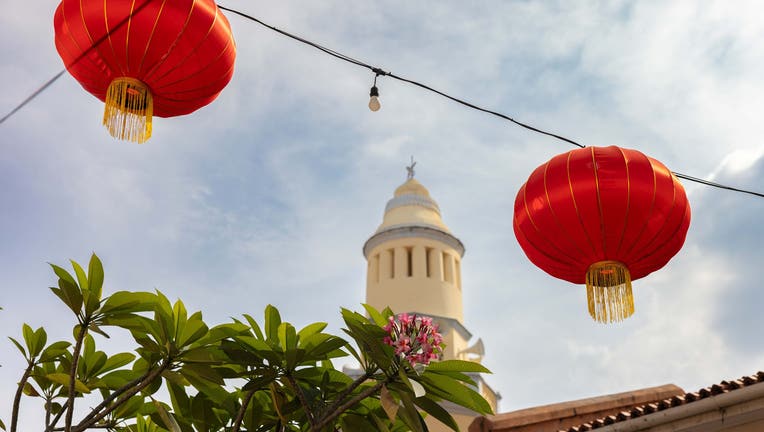
Red lanterns strung in the sky with a religious building in the background. (Getty Images)
The week of Feb. 16 marks an overlap in three distinct cultural and religious traditions across the globe: Lunar New year, Ramadan and Lent.
Here’s what to know:
Why this overlap happens
Big picture view:
All three traditions center on renewal and reflection — despite coming from different faith and cultural traditions.
Timeline:
Each has their own timing and place in the calendar, having to do with the moon:
- Feb. 17, 2026: Lunar New Year follows the lunar calendar and begins on the first new moon, which falls on Feb. 17 this year.
- Feb. 18, 2026: Lent is the 40-day period leading up Easter for Christians that begins with Ash Wednesday, which falls on Feb. 18. Easter, which is April 5 this year, is determined by the first full moon that occurs after the vernal equinox.
- Feb. 18-19, 2026: Ramadan is the ninth month of the Islamic lunar calendar, traditionally beginning on the sighting of the crescent moon. It’s expected to begin around Feb. 18 or 19 this year, varying among countries.
RELATED: Was Saint Valentine real? The murky history of Valentine's Day
What is Lunar New Year?
Big picture view:
The Lunar New Year is a major festival celebrated in several Asian countries, and by an estimated two billion people worldwide. Also known as Chinese New Year, it begins with the first new moon of the lunar calendar and ends 15 days later.
Dig deeper:
In China, many families thoroughly clean their homes days before the Chinese New Year begins. This is usually done to rid homes of bad luck, according to Britannica. Food, trinkets and paper offerings are also extended to ancestors or deities, as well as fruit, tea, sculptures, incense and candles.
Other celebration rituals include hanging lucky scroll messages, setting off firecrackers or fireworks, eating long noodles and dumplings with symbolic meanings and exchanging cash gifts.
What is Ramadan?
Big picture view:
Muslims observe the holy month in a ritual of daily fasting from dawn to sunset. Ramadan is followed by the Islamic holiday of Eid al-Fitr.
Dig deeper:
Socially, it often brings families and friends together in festive gatherings around meals to break their fast. It also is a time for increased worship, religious reflection and charity.
Fasting is one of the Five Pillars of Islam, along with the profession of faith, prayer, almsgiving and pilgrimage.
What is Lent?
Big picture view:
Lent is the calendar season in most Christian churches that leads up to Jesus’ death on Good Friday and resurrection on Easter. A somber time, it begins with Ash Wednesday, which is designated by counting backward 40 days from Easter, minus the Sundays.
The 40 days alludes to the 40 days that Jesus fasted in the wilderness after his baptism, in preparation for his public ministry.
Dig deeper:
On Ash Wednesday, many Christians go to church for a service that emphasizes the start of a season of reflection, self-denial and repentance from sin. Many are marked with a cross of ashes on their forehead.
The day is considered an obligatory fast day for Roman Catholics between 18 and 59 — meaning limiting food to one full meal and two smaller-than-normal meals.
Of note:
Mardi Gras, also observed as "Fat Tuesday," also coincides with the beginning of Lent – the day before Ash Wednesday – and takes place this year on Tuesday, Feb. 17.
The Source: Information was taken from previous FOX Television Station reportings and The Associated Press. This story was reported from Detroit.