

Consumers urged to stop using male-to-male extension cords over fire, electrocution risk

How car recalls get reported
The National Highway Traffic Safety Administration (NHTSA) officially start car recalls after receiving complaints from consumers.
WASHINGTON - The U.S. Consumer Product Safety Commission (CPSC) has secured the removal of hazardous male-to-male extension cord listings from major retailers over "serious risk" of an elecrocution or a fire.
The notice, issued earlier this week, said the cords were sold on major e-commerce platforms, including Walmart, eBay and AliExpress.
CPSC warns consumers to stop using male-to-male extension cords
Big picture view:
According to the CPSC, the cords have exposed prongs that can become energized when plugged into a power source.
The cords are often used to supply power from a generator to a residential electrical system, a dangerous practice known as backfeeding, that can result in serious injury or death from an electrocution or fire.
RELATED: List of recalled products
The federal agency said their short length also increases the likelihood that generators will be operated in enclosed spaces or too close to homes, creating a risk of carbon monoxide poisoning.
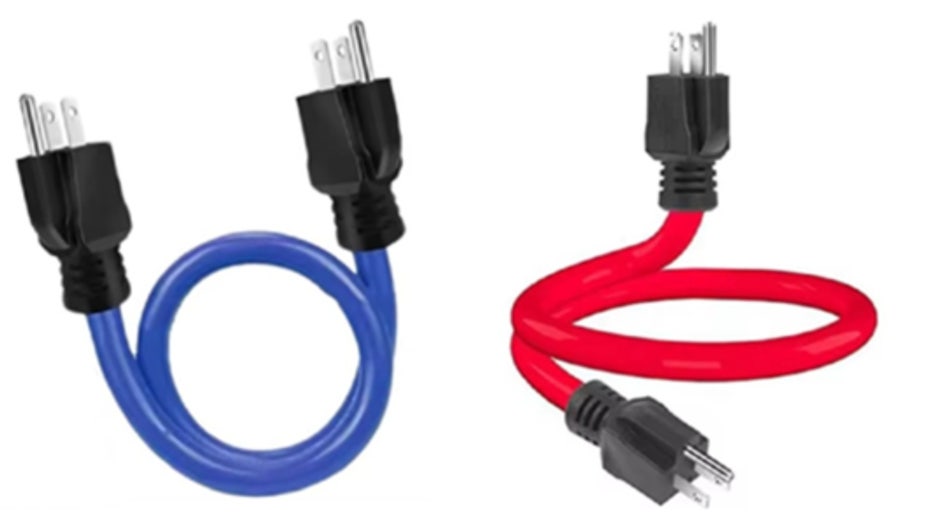
Federal regulators warn that these extension cords pose deadly fire and electrocution risks, prompting major retailers to pull listings. (Credit: CPSC)
CPSC urges consumers to stop using and dispose of the cords immediately. Consumers should unplug them carefully and avoid touching exposed prongs.
About these extension cords
Dig deeper:
The blue, red or yellow extension cords have two male ends with a three-prong black plug and were manufactured in China.
Below is a list CPSC provided of the delisted extension cords:
- Shenzhen Lieniao Import & Export extension cords sold on eBay.com by part-phone
- Wz-Ei Co. Ltd. extension cords sold on Walmart.com by WITYUKE
- Ganjiang New District Yuslow Toys Sales Co. Ltd. extension cords sold on AliExpress.com by GOOD LIFE TO U store
- Shenzhen Tebida Trading Co. Ltd. extension cords sold on AliExpress.com by Kitchenware store
- Shenzhen Tuotu Xiaoyi Technology Co. Ltd. extension cords sold on eBay.com by de-wireless
- Hefei Yaduan Trading Co., Ltd. extension cords sold on eBay.com by 4ubenefit
- Shenzhen Excellence Wisdom Software Co. Ltd. extension cords sold on AliExpress.com by Famure Drop Shipping
- Huizhou Xiyan Digital Co. Ltd. extension cords sold on AliExpress.com by ABSF Tools
CPSC takes action to delist the products from online retailers
What's next:
CPSC said it was taking action to prevent the products from continuing to reach U.S. consumers through online marketplaces.
"Male-to-male extension cords, often referred to as ‘suicide cords,’ pose a serious risk of fire and electrocution and have no legitimate household use," CPSC Acting Chairman Peter A. Feldman said in a statement. "CPSC has warned consumers about these hazards for years. We are now taking the next step by securing delisting commitments from e-commerce platforms to remove these dangerous products from the marketplace."
The federal agency said the China-based sellers have been unresponsive to CPSC requests for a recall or information about these products.
Nevertheless, they said they have secured the removal of these listings from the e-commerce platforms where they were sold.
Walmart, eBay, and AliExpress have committed to identifying and delisting similar hazardous products.
The Source: The information for this story was provided by CPSC. This story was reported from Los Angeles.