

Canada wildfire smoke pushing down to NY area this week, NWS warns
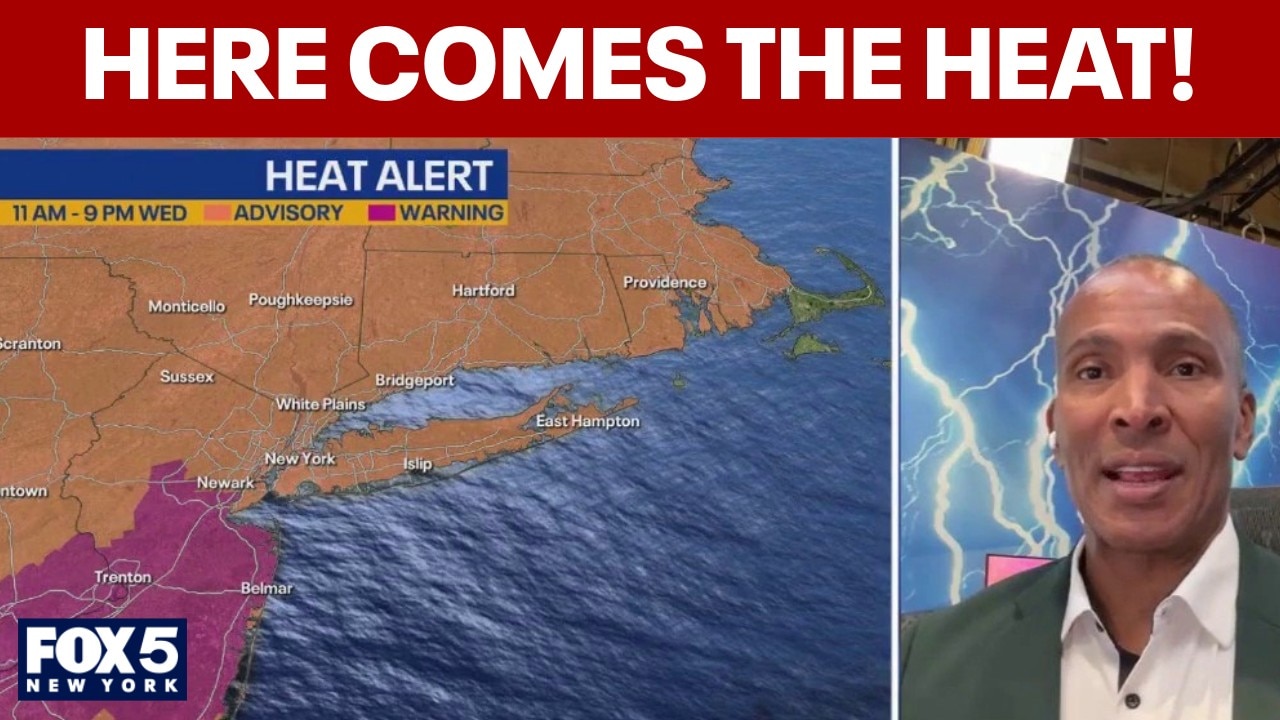
NYC weather forecast: Here's how high temps could hit this week
FOX 5 NY's Mike Woods joins Dan Bowens on Newsroom Live to talk about the potential for a heat wave this week in New York City.
NEW YORK - A massive outbreak of Canadian wildfires is sending plumes of smoke all the way down to the New York region this week, impacting air quality, according to the National Weather Service.
Canada wildfires
What we know:
Ontario is in the middle of its annual wildfire season, which goes from April through October. And while wildfire activity is actually below the seasonal average across Canada so far this year, right now, there are more than 150 wildfires active in Ontario.
The wildfires are pushing smoke down into the U.S. Right now, the fires are heavily impacting the Great Lakes region, but by later this week, the New York Metro area could see increased activity.
Local perspective:
You may already be smelling smoke in our area, according to the NWS. But later this week, from Wednesday into Thursday, the region will see more smoke closer to the Earth's surface.
The smoke likely won't affect air quality on Tuesday, the NWS said, but as more surface smoke moves in, it could lead to poor air quality and limited visibility.
The New York Department of Environmental Conservation has issued several Air Quality Health Advisories over much of western New York state on Wednesday.
Here in New York City, the Office of Emergency Management says that it's monitoring the smoke plume as it heads toward the city from Canada. and that "any temporary spikes in fine particulate matter are currently expected to stay below air quality health advisory triggers, but conditions can change."
Why you should care:
Officials are warning anyone sensitive to air quality, like children, older adults, people who are pregnant and people with heart and lung conditions to stay inside somewhere with air conditioning or filtration while the smoke is a threat.
Air quality map
This map from AirNow.gov shows the current air quality in the New York City area.
Click HERE if you're having trouble viewing the embedded map.
Heat advisories and extreme heat warnings in effect across northeast
Dig deeper:
This all comes as the region faces another potential heat wave this week. Heat advisories are in effect from as far north as Vermont to as far south as Virginia through Wednesday evening.
Parts of New Jersey and southeastern Pennsylvania are under extreme heat warnings through Wednesday, with the NWS predicting heat index values as high as 108 degrees.
Forecasters say that increased smoke could actually limit high temperatures. But even still, city officials are recommending residents go to a cooling center if they don't have air conditioning, and if they do, stay home with the doors and windows closed.
KN95 masks are also available at public libraries across all five boroughs, including Brooklyn Public Library locations, Queens Public Library locations, St. George Library Center on Staten Island, Bronx Library Center, the Stavros Niarchos Foundation Library and the New York Public Library's main branch in Manhattan.
The Source: Information in this story is from the National Weather Service, the Ontario Ministry of Natural Resources, the Canadian government, the New York Department of Environmental Conservation and the U.S. Environmental Protection Agency.