

2 dead in Legionnaires' disease cluster on Upper East Side as source 'likely eliminated'
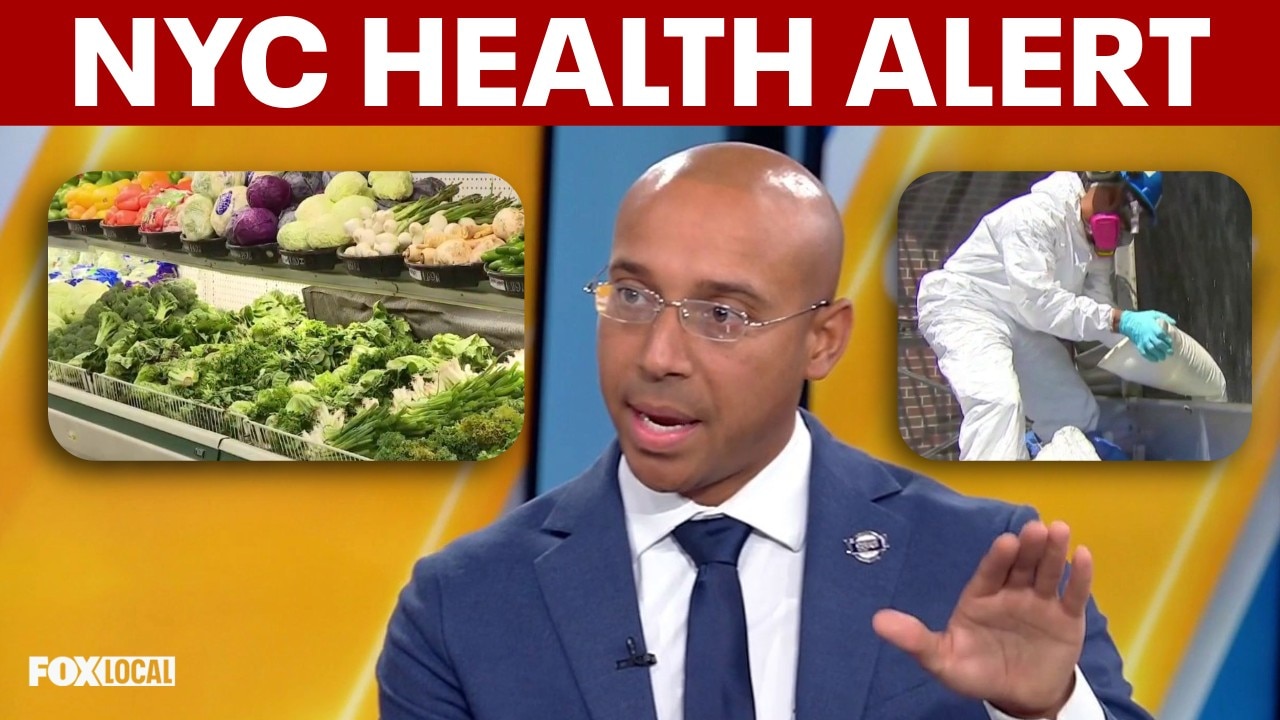
NYC health alert: Legionnaires outbreak grows as cyclospora concerns spread
New York City’s health commissioner joins Good Day New York with updates on two public health concerns: the Upper East Side Legionnaires’ disease outbreak, where 76 buildings have tested positive for Legionella bacteria, and a cyclospora illness linked to contaminated fruits and vegetables. Officials explain how people can be exposed, who is most at risk and what steps residents can take to stay safe.
NEW YORK CITY - A second person has died this week in connection with the Legionnaires’ disease cluster on the Upper East Side.
The second death comes as health officials announced that newly diagnosed cases have seen a sustained decline over the last week, signaling that the containment strategy has likely eliminated the source of the exposure.
By the numbers:
The New York City Health Department says that data indicates that the outbreak has stabilized significantly.
Between July 10 and July 17, the city confirmed an average of fewer than one new case per day. The first week of the investigation (July 2–July 8) saw an average of more than eight new cases daily.
As of July 18, the Health Department has released the following numbers in relation to the cluster:
- Total cases: 72
- Discharged from hospital: 50
- Hospitalized: 9
- Fatalities: 2
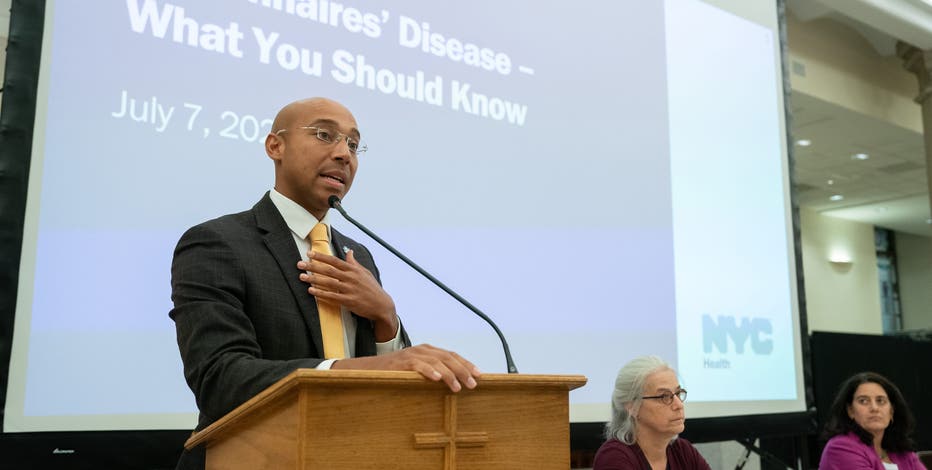
1 dead in relation to Legionnaires' disease cluster on UES, NYC Health Commissioner says
One person has died in connection with the Legionnaires' disease cluster on the Upper East Side, according to New York City's health commissioner.
"We are heartbroken to learn that another New Yorker has lost their life to Legionnaires’ disease on the Upper East Side," said NYC Health Commissioner Dr. Alister F. Martin. "While we mourn this loss, the data are also encouraging. Our aggressive strategy of testing, enforcement, and remediation appears to have stopped the source of exposure."
Containing the cluster
What we know:
On July 14, the city ordered 76 buildings with cooling towers that showed initial positive PCR results to immediately clean and disinfect their systems. Within 48 hours, officials say each building had completed the required remediation.
Previously, buildings with positive PCR screenings were only required to boost chemical disinfectants while waiting up to two weeks for live culture confirmations.
In total, officials collected samples from 183 cooling tower systems across the affected area, and all initial PCR screenings are now complete. Live culture testing is currently underway to determine if active bacteria remain.

New cooling towers face disinfection orders as Legionella cases hit 59
City officials warn that more buildings could be ordered to disinfect as they wait on additional cooling tower test results during an ongoing outbreak. Local leaders are heavily criticizing the health department for withholding the outbreak's epicenter address and waiting on these test results instead of ordering a widespread disinfection ahead of an incoming heat wave.
Cooling tower enforcement
Dig deeper:
New York City already holds some of the strictest cooling tower maintenance laws in the United States, but enforcement has hit an all-time high.
- Increased inspections: During the first six months of 2026, inspectors completed nearly 1,600 cooling tower inspections—a 35% increase over the same timeframe last year.
- Heavy fines: In Fiscal Year 2025, the city issued 1,337 violations (including 253 public health hazards and 810 critical violations), collecting roughly $680,000 in fines.
- 31-day rule: New regulations that went into effect this past May now require cooling tower operators to test for Legionella every 31 days while operational, tripling the frequency of prior mandates. So far, 77% of operators are already actively submitting data.
What's next:
Moving forward, the Health Department is inspecting every Upper East Side tower that tested positive, alongside an unregistered tower discovered during the investigation. Furthermore, all operators citywide have been ordered to increase their summertime biocide treatments immediately.
The Source: Information from this article was provided by the New York City Health Department.