

New report reveals utilities plan $1.4 trillion in spending that may push higher bills for consumers
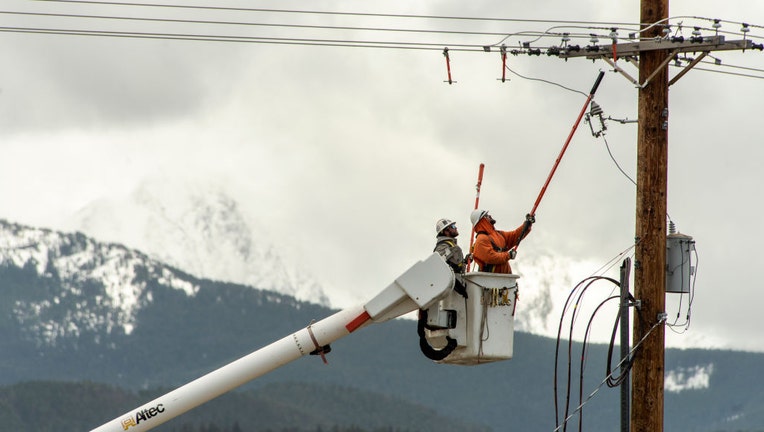
FILE-Linemen work on a rebuild of electric transmission lines in Park County on May 14, 2020 in Livingston, Montana. (Photo by William Campbell/Getty Images)
Consumers face the prospect of paying higher utility bills related to U.S. investor-owned utilities planning a $1.4 trillion investment in capital spending over a five-year span.
A new report from PowerLines, a consumer education group, reveals the massive financial investment will go toward upgrading old power grids.
The report also noted that AI data centers, manufacturing, and grid strengthening against severe weather are propelling these investments, with some of the resources devoted for transmission system upgrades.
PowerLines explained in their report that power grids have been pummeled by storms and fires, requiring rebuilding and investment to fortify equipment against future damage. Moreover, inflation for materials and labor, and backlogs in the supply chain, are driving project costs higher.
Findings from the report also referenced rate requests and recent earnings reports from the investor-owned utilities, and learned that over 30 of them stated data centers would be a driver for growth and spending through the end of 2030.
Utility costs impact on consumers
Why you should care:
The $1.4 trillion that investor-owned utilities plan to spend over the next five years through 2030. But a potential spike in spending on this project may result in higher electricity bills for consumers because utilities frequently pass costs onto homes in the form of rate increases.
PowerLines' report revealed that utility bills have climbed 40% since 2021. And in a separate report released last year, PowerLines determined that 62% of Americans have seen their electric and/or gas bills rise in the past year, while another 73% worry that their bills will rise further in the next year.
Furthermore, surging electricity costs, which jumped 4.6% in March, compared to 2025, are surpassing inflation, according to the Bureau of Labor Statistics.
The Source: Information for this story was provided by a report from PowerLines and The Wall Street Journal. This story was reported from Washington, D.C.