

Long Island med student has kidney saved thanks to in-class ultrasound

Med student saved thanks to in-class assignment
Aria Moreno, a med student on Long Island, had her kidney saved after she volunteered for an in-class assignment.
HEMPSTEAD, N.Y. - A Long Island med school student made a scary discovery recently when she volunteered for an in-class demonstration, and thanks to the instructor's keen eye, she was able to save her kidney.
Scary discovery
What we know:
Aria Moreno is a first-year student at the Zucker School of Medicine at Hofstra University.
Back in September, she and her classmates were learning how to perform an ultrasound in a lab class, and Moreno volunteered to be the patient.
That's when Dr. Amanda Aguilo-Cuadra, the resident leading the lesson, noticed something was wrong. Aria's right kidney was swollen and dark.
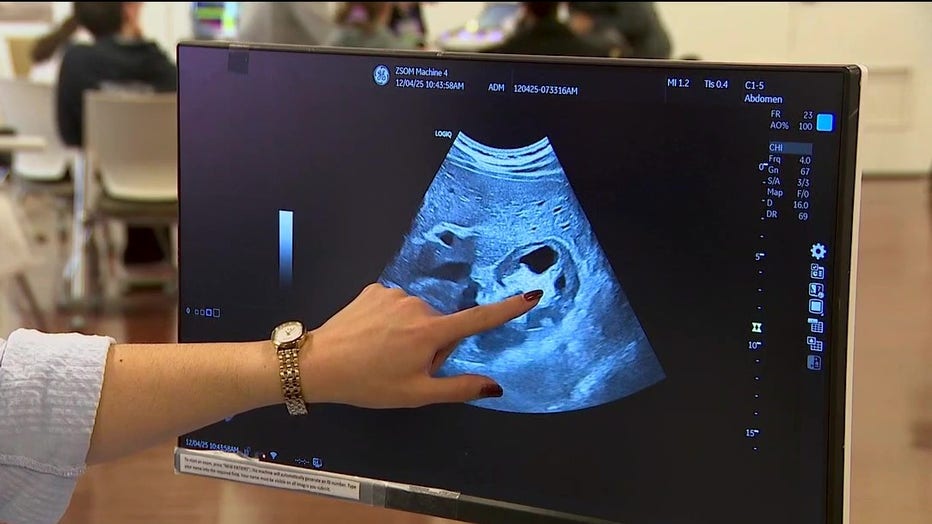
An ultrasound of a kidney.
"We're looking at the ultrasound and we're like, ‘Wow that’s so cool,'" Moreno said. "We don't know what a normal kidney looks like, we're just excited to be there, honestly."
Amanda pulled Aria aside after the demonstration, explained what she saw, and recommended she Aria get it checked out.
"How she handled the situation put me at ease," Aria said of Dr. Aguilo-Cuadra. "I take a lot of admiration in the way she did that."
Classroom lesson leads to surgery
Dig deeper:
After that day, Aria went to get more scans, where she discovered she needed surgery to remove a four-centimeter kidney stone. Doctors said Aria had already lost 50% of her kidney function, despite not showing any symptoms.
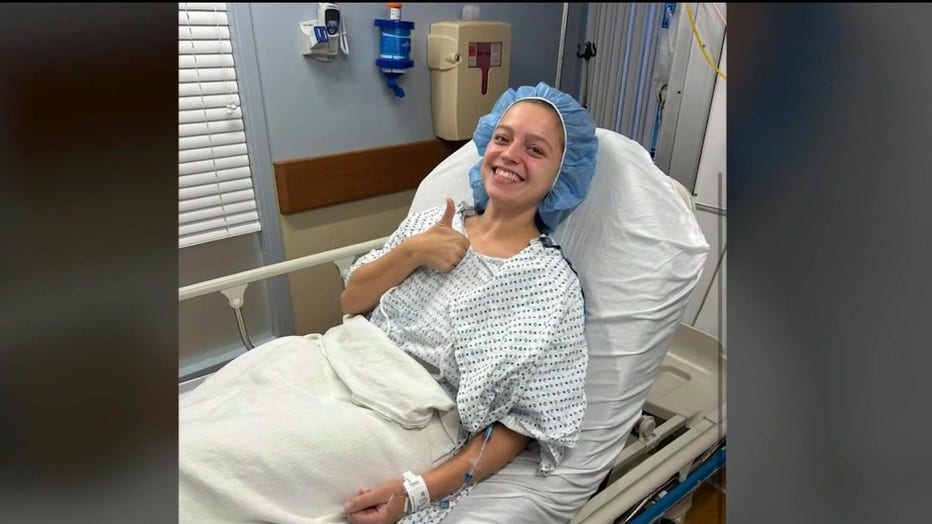
Aria Moreno prepared for surgery.
Catching it when they did allowed them to save the remaining half.
"No red flags at all," Aria said. "No back pain, no urinary symptoms, no nothing. I would have never known."
What they're saying:
Months after the discovery, Aria says that what happened that day in the lab isn't just part of the her medical history, but her training, too.
"Having that patient experience, it really made me more empathetic," Aria said. "I think it's gonna make me a better doctor."
The Source: Information in this story is from interviews with Aria Romero and Dr. Amanda Aguilo-Cuadra.