

Easy guide to today’s Artemis II launch

Astronomer Derek Pitts breaks down Artemis II mission ahead of launch
An astronomer from The Franklin Institute explains the significance of Artemis II, a planned test flight by NASA that will send astronauts farther from Earth than ever before.
Artemis II is NASA’s first crewed mission in its Artemis program, marking humanity’s return to the moon for the first time since 1972.
What we know:
It is a test flight designed to pave the way for future lunar landings and a long-term moon base.
What does ‘Artemis’ mean?
The mission is named after Artemis, the twin sister of Apollo in Greek mythology, signaling NASA’s next era of lunar exploration after the Apollo missions.
Who is going on Artemis II?
Reid Wiseman, Victor Glover, Christina Koch, Jeremy Hansen

(L-R) Canadian Space Agency astronaut Artemis II Mission Specialist Jeremy Hansen, NASA astronaut and Artemis II Mission Specialist Christina Koch, NASA astronaut and Artemis II Commander Reid Wiseman and NASA astronaut and Artemis II pilot Victor Gl
Four astronauts will fly aboard NASA’s Orion spacecraft:
- Reid Wiseman is the mission commander and a former chief of NASA’s astronaut corps who previously lived aboard the International Space Station.
- Victor Glover is a Navy test pilot and will become the first Black astronaut to travel to the moon.
- Christina Koch holds the record for the longest single spaceflight by a woman and will be the first woman assigned to a lunar mission.
- Jeremy Hansen is a Canadian astronaut and former fighter pilot who will become the first non American to travel to the moon.
Together, they represent a historic and diverse crew, including the first woman, first person of color and first international astronaut to take part in a lunar mission.
When is Artemis II launching?
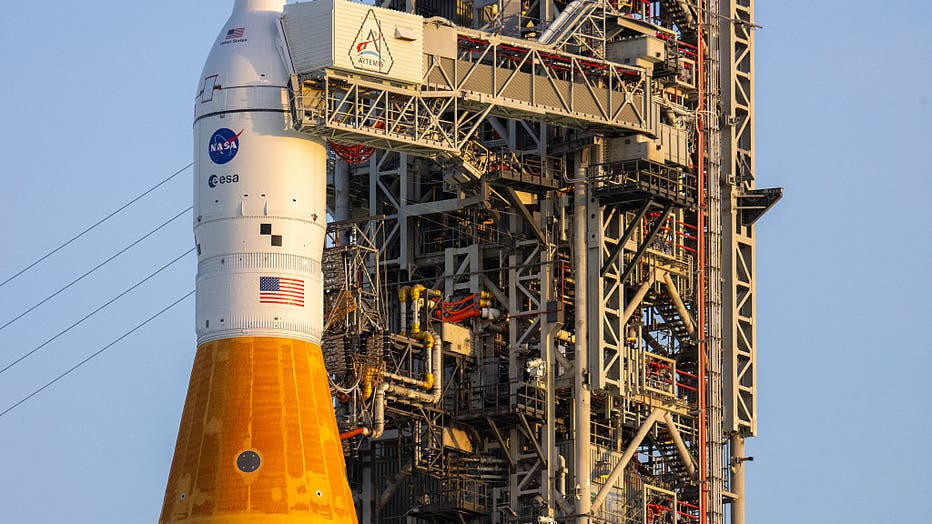
NASA's Artemis II Space Launch System rocket and Orion spacecraft rest on Launch Pad 39B at Kennedy Space Center in Cape Canaveral, Florida, on March 31, 2026, ahead of the crewed lunar mission. The first window to launch from the Kennedy Space Cente
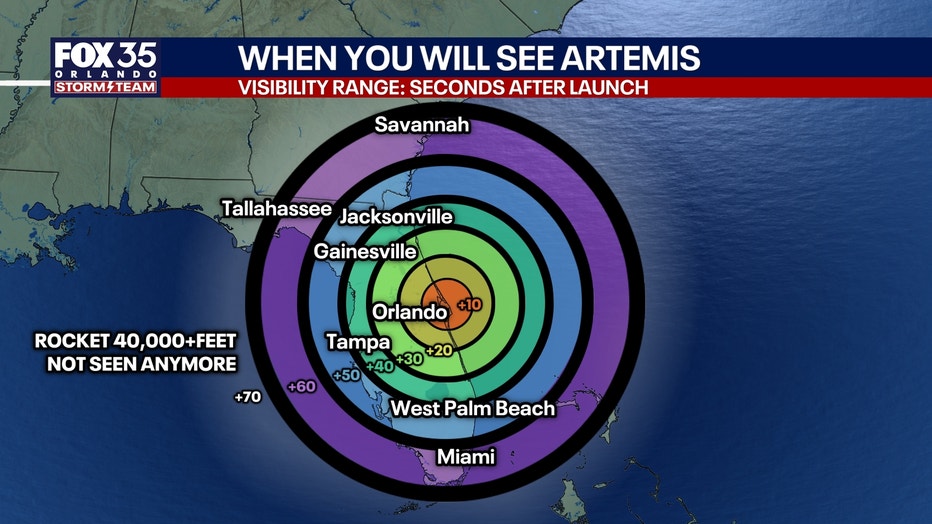
The 32-story Space Launch System rocket is poised to blast off Wednesday evening with a two-hour launch window beginning at 6:24 p.m. EDT at Kennedy Space Center in Florida.
Will Artemis II astronauts land on the moon?
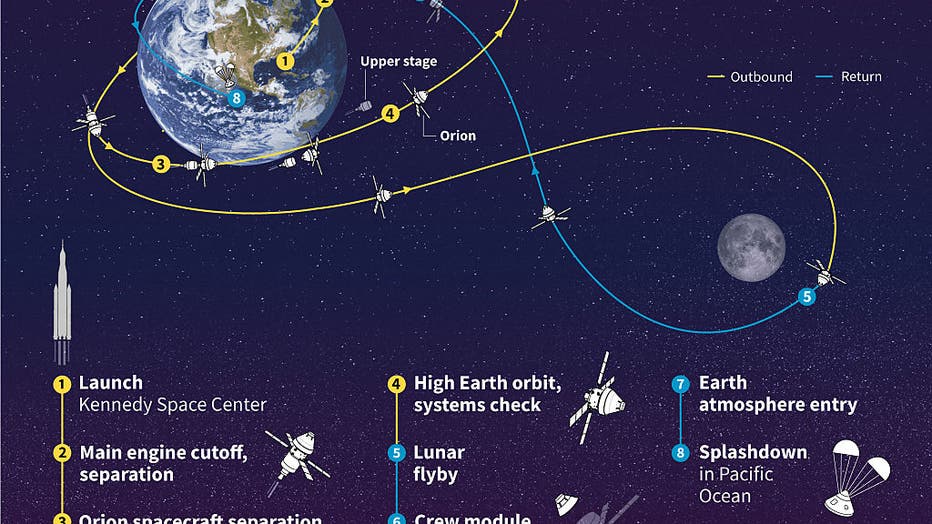
Infographic showing a schematic outline of the NASA's Artemis II mission voyage to take a crew of four in the Orion spacecraft around the Moon and back to Earth with the launch planned for early 2026 (Graphic by Jonathan WALTER and Paz PIZARRO / AFP
Artemis II is a flyby mission, meaning the crew will travel around the moon but not land on its surface.
The mission is designed to test spacecraft systems and crew operations ahead of Artemis III, which is expected to carry astronauts to the lunar surface.
How long will Artemis II be in space?
The mission will last about 10 days, specifically nine days, one hour and 46 minutes from liftoff to splashdown.
What will Artemis II do?
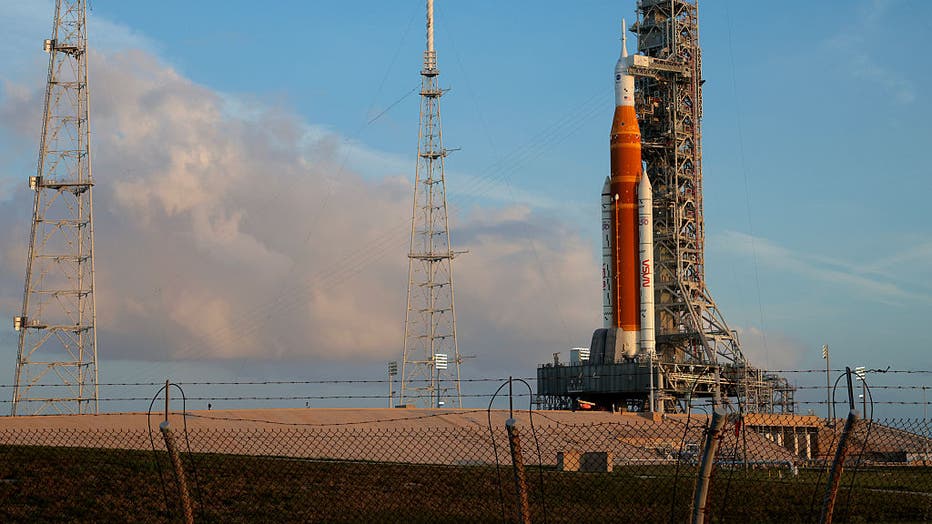
CAPE CANAVERAL, FLORIDA - MARCH 31: NASA's 322-foot-tall Artemis II Space Launch System rocket and Orion spacecraft stand on Launch Complex 39B at Kennedy Space Center on March 31, 2026 in Cape Canaveral, Florida. The 10-day mission will take NASA as
This is a flyby mission, meaning astronauts will not land on the moon. Instead, they will:
- Orbit Earth for about 25 hours after launch
- Practice maneuvering and docking techniques in space
- Travel roughly 244,000 miles to the moon
- Loop around the moon using a free return trajectory
- Travel about 5,000 miles beyond the moon, farther than Apollo 13
- Return directly to Earth without additional propulsion
What to expect during the Artemis flyby
The crew will get a rare view of the moon’s far side, including regions never seen by humans in person.
At the closest point, the moon will appear about the size of a basketball at arm’s length during a roughly six hour flyby.
What happens when they return to Earth?
What's next:
Like the Apollo missions, Artemis II will end with a splashdown in the Pacific Ocean.
One of the biggest tests will be Orion’s heat shield, which must withstand extreme temperatures as the capsule re enters Earth’s atmosphere.
When was the last trip to the moon?
The last time astronauts traveled to the moon was Apollo 17 in 1972, more than 50 years ago.
The Source: This report is based on information from the Associated Press.