

4 cases of 'rabbit fever' confirmed on Long Island, health department says

SUFFOLK COUNTY, NY - A fourth case of tularemia, a rare infectious disease nicknamed "rabbit fever," has been confirmed on Long Island.
What we know:
The Suffolk County Department of Health Services said Thursday it was investigating four cases of tularemia, a tick-borne disease that can spread through small dead animals, like rabbits.
The county's health commissioner, Dr. Gregson Pigott, reiterated that tularemia is uncommon, but this is not the first time multiple cases have popped up.
Suffolk logged six cases in 2025, four in 2024, and three in 2023, according to Pigott.
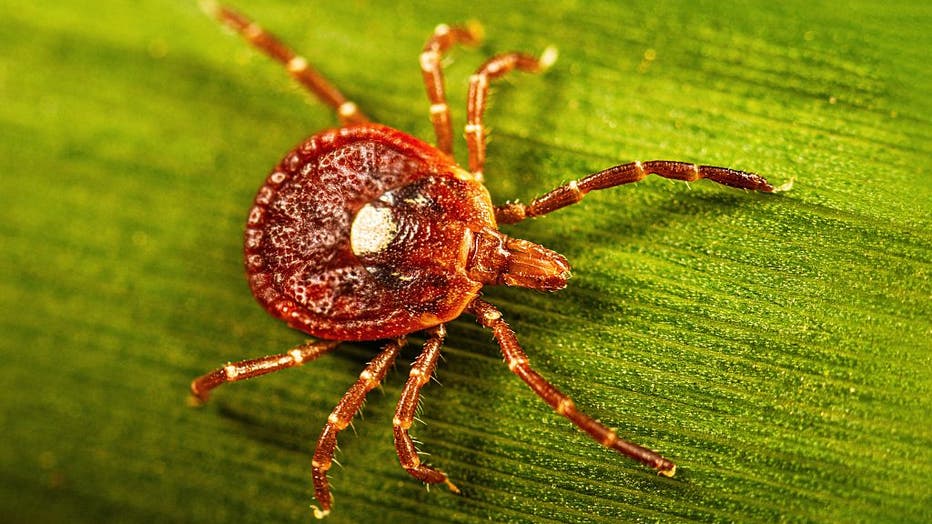
An adult female lone star tick (Amblyomma americanum) crawls on a blade of grass, 2023. Image courtesy CDC. (Photo by Smith Collection/Gado/Getty Images)
What is tularemia?
Why you should care:
Tularemia is an infectious disease that stems from ticks and spreads to small animals, most commonly rabbits.
Humans may catch it by handling the dead animals while hunting or even doing everyday outdoor chores.
It can also spread to humans directly from a tick bite.
What are the symptoms of ‘rabbit fever’?
What they're saying:
Dr. Bruce Hirsch, attending physician for infectious diseases at Northshore Hospital, said "rabbit fever" symptoms include: swollen lymph nodes, high fevers, and even a pneumonia-type illness.
"Rabbit fever is really unusual. I've been in infectious disease for a long period of time, and I see this diagnosis regularly on board examinations, not in the real world," Hirsch said.
While tularemia is highly treatable, Hirsch cautioned that patients will stay sick unless a doctor makes the connection and knows to test specifically for it, which he said is what happened in one of the recent Long Island cases.
How to prevent it
Dig deeper:
Health experts say prevention is key with tularemia.
Critical steps include wearing long pants outside, using insect repellents with DEET, and checking yourself for ticks when you're back inside.
Dogs and cats are also at risk, so putting them on preventatives is crucial.
Local perspective:
Hirsch said Long Islanders should be aware of tularemia, but not overly worried because it is rare.
He's more concerned about the broader growing health risks posed by ticks across the region.
"It's an indication that ticks are more populous and posed together, more of a threat to our health," Hirsch said.
The Source: This story includes information from the Suffolk County Department of Health.