

Why over 1/3 of New Jersey voters now belong to no party
Battleground: Midterm Voter Trends
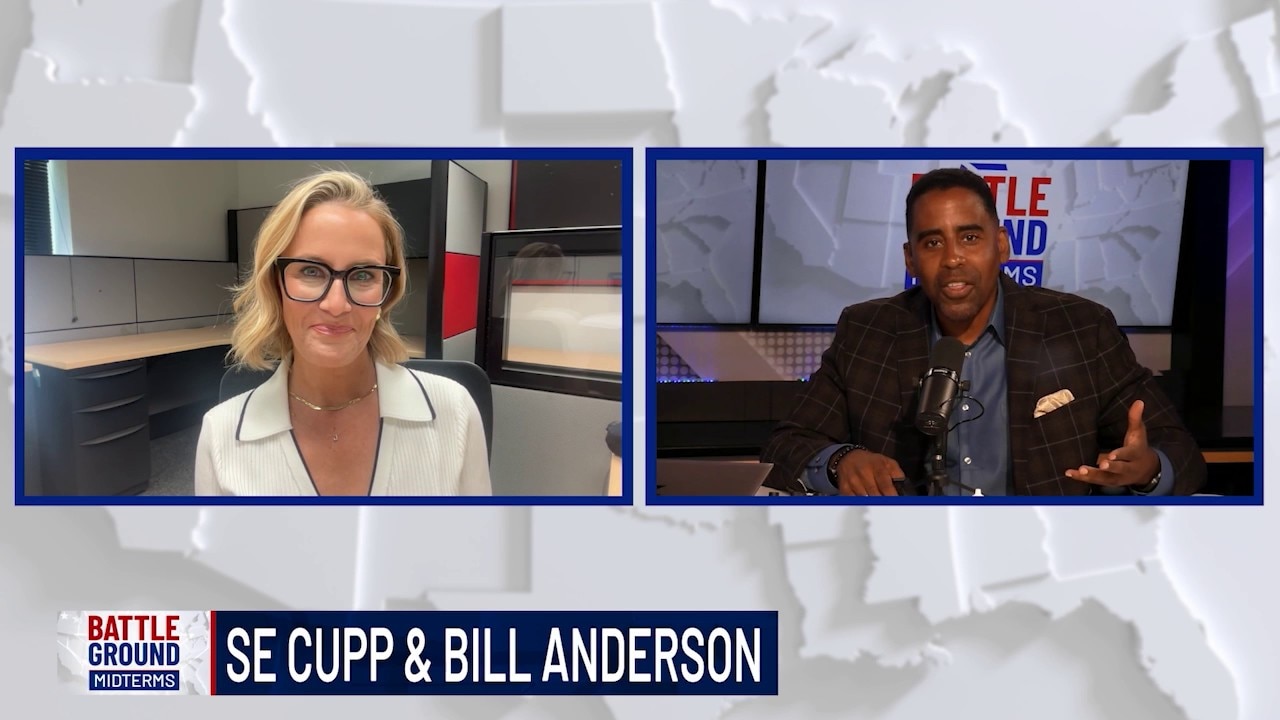
S.E. Cupp and Bill Anderson break down the key races shaping the 2026 midterm elections and the fight for control.
NEW BRUNSWICK, N.J. - Across the Mid-Atlantic and Northeast, traditional party loyalty is experiencing a systemic test heading into the midterm elections.
Voters are dealing with compounding cost-of-living pressures as well as deep-seated exhaustion with both major political parties. As a result, the regional electorate is fracturing along new lines.
The political landscape that emerged from the 2024 presidential election is showing signs of shifting, even as demographic and educational divides continue to shape voter behavior, according to political scientists and the Pew Research Center.
Additionally, there's been record growth among nonpartisan voters—those who are not registered as either a Democrat or a Republican. According to data from the Independent Voter Project, non-aligned voters now make up over 25% of the total registered electorate across the Tri-State and Mid-Atlantic regions.
These factors, paired with rising cynicism toward party establishments, are shifting the political dynamic from a traditional left-versus-right debate into a broader establishment-versus-anti-establishment struggle.
Affordability crises and coalition shifts redefine regional battlegrounds
Local perspective:
Throughout the Tri-State area, voters are expressing profound fatigue with traditional party politics, which experts say is accelerated by local tax burdens and broader economic concerns.
Party brand fatigue, local tax burdens and demand for disruptors
That dynamic is underscored by national polling showing early 2024 voting shifts already in flux. For example, according to an Oct. 16 report from the Pew Research Center, presidential approval among Hispanic registered voters has dropped to 24%—falling 14 percentage points from a 38% rating recorded following the 2024 presidential election.
The sharp retreat reflects a broader regional trend: a growing retreat into nonpartisan status paired with compounding cost-of-living pressures that are wearing down party allegiances. Across the Tri-State area and Mid-Atlantic, unaffiliated registration is surging as pocketbook strains mount, leaving voters increasingly resistant to traditional partisan appeals.
Dr. Saladin Ambar, senior scholar at the Eagleton Center on the American Governor and professor of political science at Rutgers University–New Brunswick, said that midterm politics have transformed into a struggle "about establishment versus anti-establishment."
"And those linkages cut across party, gender, race, you name it," Ambar said. "Coalitions are being reformed right now like never before in America—or certainly, in our memory, the last 40 years or so in American politics."
"... People are now embracing iconoclastic candidates," he added. "They want people who are willing to shatter at least the conventional wisdoms that they grew up with because they don't see those conventional [wisdoms] helping them anymore."
New Jersey specifically has the highest average property tax burden in the United States, a reality that touches residents across every background. Beneath that shared economic pressure, however, sharp demographic divides still exist.
According to Dr. Kelly Dittmar, director of research at the Center for American Women and Politics (CAWP) at Rutgers University, white college-educated women have continued moving toward Democrats, while white women who don't attend college remain firmly in the Republican camp—a dynamic that leaves everyday affordability as a central motivation across an otherwise divided electorate.
Dittmar notes that economic concerns consistently eclipse broader ideological debates at the ballot box.
"Pretty consistently across election cycles, we see that all voters, including women, will point to issues around cost of living and the economy as the number one issue motivating their vote," she said.
Building on that, Dittmar noted that education level continues to play a pivotal role in how suburbanites vote. Exit polling conducted by CAWP following last year's gubernatorial race shows exactly this: 62% of college-educated white women backed the Democratic candidate, compared to 57% of white women without a college degree who voted Republican.
Educational divides only tell part of the story, however, as compounding economic strain has served to fuel broader cynicism towards traditional party structures as a whole. Unaffiliated voters now account for roughly 35% of the Garden State's registered electorate, according to the Independent Voter Project.
Dr. Ashley Koning, director of the Eagleton Center for Public Interest Polling at Rutgers University, said she's increasingly seen the New Jersey public become disillusioned with mainstream political institutions.
"Much like the rest of the country, New Jerseyans are very disgruntled and frustrated with the two major parties right now," Koning said. "New [Jerseyans] don't have high opinions when it comes to either of the parties."
Statewide research from the Rutgers-Eagleton Poll confirms that institutional cynicism is anchored in daily expenses, with a majority of residents rating economic conditions negatively and citing escalating taxes and living costs as the state's most pressing problems by wide margins.
That kitchen-table squeeze was voiced directly to FOX 5 NY by a local resident responding to a recent municipal tax hike:
"Something has to give. Like, this is crazy," the resident said. "They're hitting us every which way. Who can afford a home in Jersey City anymore?"
Receding GOP gains, closed-primary friction and partisan sorting
In Pennsylvania, regional voter sentiment continues to be shaped by the razor-thin divide of recent election cycles, according to Dr. Christopher Borick, professor of political science at Lehigh University.
Borick pointed to the critical inroads Republicans carved out across key swing areas during the 2024 presidential contest—gains that now appear increasingly fragile under persistent economic strain.
"Those voters have gone away from Republicans in a big way," Borick said. "In polls, you [can] see that the gains that Republicans and the president made two years ago have gone away."
That strain is visible across the Commonwealth. In reporting on research conducted by the AP-NORC Center for Public Affairs Research, Robert Gault, a 66-year-old retired factory worker from Bradford, Pennsylvania, told The Associated Press that he believes everyday economic realities have fallen short of campaign promises:
"Our president, I thought, was going to help the country, and so far he has not really seemed to have done that with the economy or in general . . . He said, 'Make America Great Again.' And I have not seen him do that," Gault said.
Despite Pennsylvania's closed primary system—which excludes non-aligned voters from candidate selection under official Pennsylvania Department of State voting rules—independent registration is on the rise. More than 1.5 million voters in the Commonwealth are registered as independent, unaffiliated or with a minor third party, according to the department.
Plus, as University of Pennsylvania political science professor Dr. Matthew Levendusky points out, while voters are increasingly subject to "partisan sorting"—aligning their issue positions with party platforms—their underlying economic views remain heavily filtered through a partisan lens.
Featured
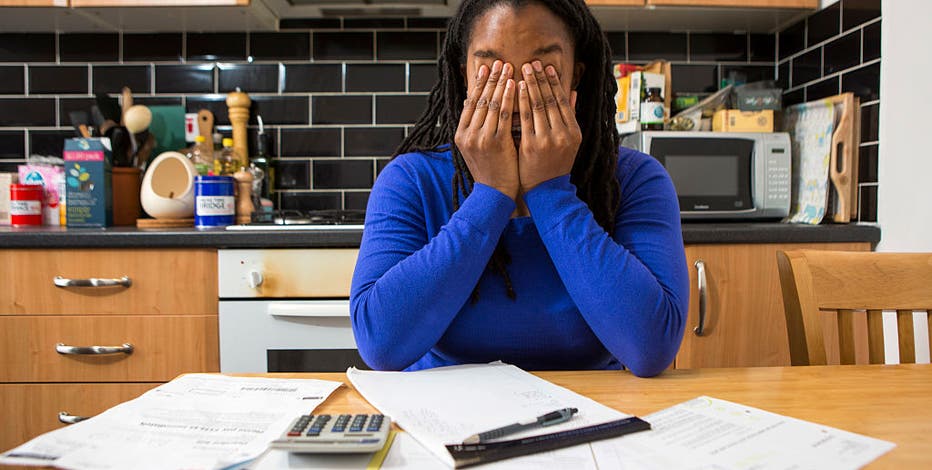
Why are rising costs weighing so heavily on New Jersey voters?
Across the Mid-Atlantic, soaring costs for housing, groceries and utilities are driving voter anxiety—forcing candidates in key battleground districts to focus on everyday affordability.
"If we were to right now look at the data on how Democrats and Republicans feel about the economy ... neither side is super optimistic about it," Levendusky said. "But Republicans, generally speaking, are going to be more positive than Democrats are, and that's going to partially reflect the fact that Republicans are in control of both chambers of Congress and the presidency right now."
Levendusky also highlighted the long-term structural realignment of the two parties' working-class and educated bases.
"The parties of the left have shifted from being ... dominated by more blue-collar union workers to increasingly educated, upscale urban professionals," he said.
Independent growth and negative partisanship in Md. and Va.
In the Washington metro region, coalition fluidity is most apparent in the rapid growth of nonpartisan voters and a tendency to vote against the ruling party in Washington rather than for an ideological platform. Indeed, more than 23% of Maryland's electorate—nearly one million voters—are registered as unaffiliated, according to tracking from the Independent Voter Project, making them the fastest-growing political segment in the state.
Dr. Mileah Kromer, director of the UMBC Institute of Politics, highlights this structural rise.
"Over the last 10 years, what we have seen is Democratic identification, as well as Republican identification, have either ... remained steady, perhaps even decreased just a slight bit," Kromer said. "But those independent voters, or our state's [unaffiliated] voters, are making up a larger and larger vote share."
Featured
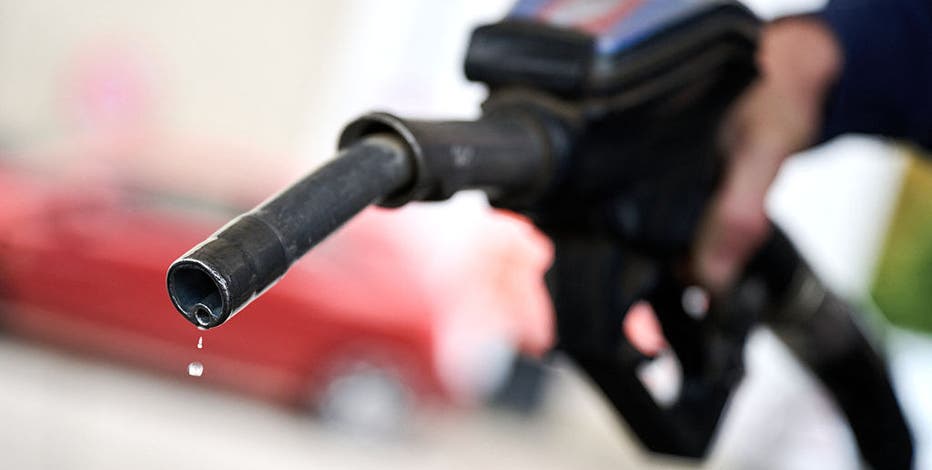
High fuel and turnpike costs weigh on New York and New Jersey voters for 2026
Rising gas prices and high commuter costs across the Mid-Atlantic are hitting suburban and rural drivers hard, making transportation affordability a key issue for voters in the 2026 midterms.
A similar pattern appears across the state line in Virginia, where polling indicates growing frustration with both political parties. In reporting on that same national study by the AP-NORC Center for Public Affairs Research, Aaron Siever, a 41-year-old independent voter from southwest Virginia, told The Associated Press that he believes persistent political conflict has crippled effective governance:
"There's so much turmoil," he said. "It really messes up chances of getting anything done. It gets really disgusting."
Closer to the capital in Northern Virginia, that political cynicism is compounded by kitchen-table realities, where local grocery indices reflect a 22% cumulative increase in food costs over recent years, according to data tracked by the U.S. Bureau of Labor Statistics Consumer Price Index.
Dr. David Ramadan, professor of practice at George Mason University's Schar School of Policy and Government and a former member of the Virginia House of Delegates, noted that minority and immigrant voter shifts seen in the 2024 election are highly fluid and impermanent.
Ramadan noted that while some minority and immigrant voters initially backed Donald Trump, that support was short-lived due to immigration rhetoric and the economy.
"There was a shift between right and left ... from the immigrant and the minority communities," Ramadan said. "So that flipped against Donald Trump at the time and remains to be an anti-Republican vote."
Looking ahead to the midterms, Ramadan warned against interpreting opposition votes as a direct embrace of the opposing party.
"Independents are going to vote against the Republicans in D.C., because of how the Trump administration is running the country, but not necessarily for Democrats in D.C.," Ramadan said. "And that's a distinction that we need to all keep in mind."
A fluid electorate
Big picture view:
Across the Mid-Atlantic and the Northeast, the rising cost of living is driving widespread voter fatigue and leading to more people registering as unaffiliated. From the Tri-State area to the Washington metro region, eroding demographic bases and shifting coalition loyalties have transformed midterm politics into an establishment-versus-anti-establishment struggle.
Ultimately, success in the coming elections will depend on which party can sell its vision of America to an increasingly unbound electorate that prioritizes economic relief.
The Source: Information was sourced from interviews with Dr. Saladin Ambar (Eagleton Center on the American Governor / Rutgers University–New Brunswick), Dr. Kelly Dittmar (Center for American Women and Politics / Rutgers University), Dr. Ashley Koning (Eagleton Center for Public Interest Polling / Rutgers University), Dr. Christopher Borick (Lehigh University), Dr. Matthew Levendusky (University of Pennsylvania), Dr. Mileah Kromer (UMBC Institute of Politics) and Dr. David Ramadan (George Mason University's Schar School of Policy and Government). Supplementary data and reporting were compiled from USAFacts, Pew Research Center, CIRCLE at Tufts University, Independent Voter Project, U.S. Bureau of Labor Statistics, Tax Foundation, Rutgers-Eagleton Poll, CAWP, Franklin & Marshall College Poll, University of Maryland, Pennsylvania Department of State, Ballotpedia, The Associated Press, AP-NORC Center and FOX 5 NY.