

Tornadoes and thunderstorms: Busting some of the biggest severe weather myths
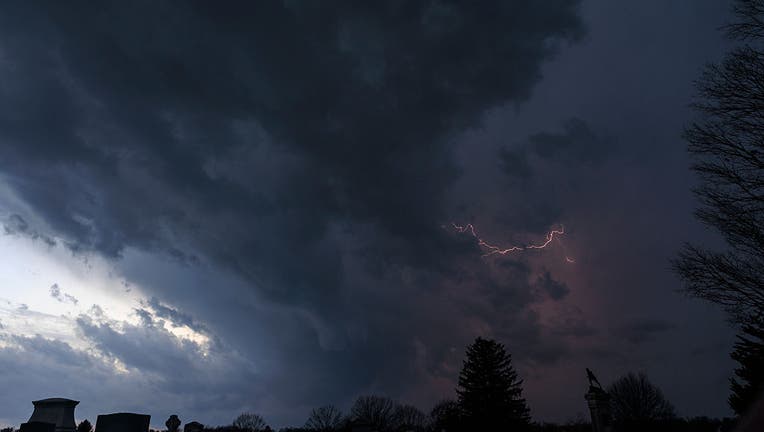
BLOOMINGTON, INDIANA - FEBRUARY 19: Lightning streaks across the sky over west Bloomington as seen from Rosehill Cemetery on February 19, 2026, in Bloomington, Indiana. At least one tornado later touched down, damaging a bank, the animal shelter, and
When severe weather strikes, panic can set in. Unfortunately, many of the safety tips passed down through generations are outdated and potentially dangerous.
Here are some of the most pervasive tornado and thunderstorm myths, debunked by the experts.
Tornadoes
- Myth: Open your windows to equalize pressure before a tornado hits. Fact: It was believed that the sudden drop in atmospheric pressure during a tornado would cause a sealed house to explode outward. However, that is entirely false. Even the most powerful tornadoes (EF5) do not drop the air pressure low enough to cause a house to explode. It's actually violent winds that breach a home, blow the roof and walls inward and cause the rest of the structure to collapse outward. Opening windows wastes time needed to seek shelter and invites damaging winds into your home.
- Myth: Highway overpasses are a safe place to take cover. Fact: Seeking shelter under a highway overpass is one of the most dangerous things you can do during a tornado. The shape of a typical bridge acts like a wind tunnel, actually intensifying the wind speeds. Airborne debris also gets funneled directly into these spaces at dangerous speeds. If you are caught on the road, the National Weather Service advises abandoning your car for a sturdy building, or lying flat in a low ditch away from your vehicle while covering your head as a last resort.
- Myth: Tornadoes don't hit cities, cross rivers or travel over mountains. Fact: No geographical feature can stop a tornado. They can cross rivers, roar through valleys, travel up mountains, and strike major metropolitan areas with ease. The catastrophic Tri-State Tornado of 1925, the deadliest in U.S. history, famously crossed both the Mississippi and Wabash Rivers.
- Myth: Go to the Southwest corner of a building for safety. Fact: The safest place in a building is in a small, reinforced room, such as a bathroom or closet, near the center of the building on the lowest floor.
Thunderstorms and lightning
- Myth: Rubber tires or rubber-soled shoes will protect you from a lightning strike. Fact: While it is true that you are generally safe inside a hard-topped, fully enclosed vehicle, it has nothing to do with the tires. The protection comes from the metal cage of the car, which safely conducts the electrical current around the outside of the vehicle and onto the ground. Just make sure you aren't touching any metal on the inside of the car.
- Myth: If you touch someone who has just been struck by lightning, you'll be electrocuted. Fact: The human body does not store electricity. It is completely safe to touch a lightning victim to provide first aid. In fact, delaying CPR because of this myth can be fatal.
- Myth: Lightning never strikes the same place twice. Fact: Lightning frequently strikes the exact same place multiple times, especially for tall, pointy, and isolated objects. The Empire State Building in New York City is struck by lightning nearly 100 times every single year.
- Myth: You should seek shelter under a tree to stay dry. Fact: Being underneath a tree is the second leading cause of lightning casualties.
The Source: Information from this article was sourced from the National Weather Service and National Oceanic and Atmospheric Administration.