

NYC Health expands Legionnaires' disease outreach area in South Bronx as testing continues
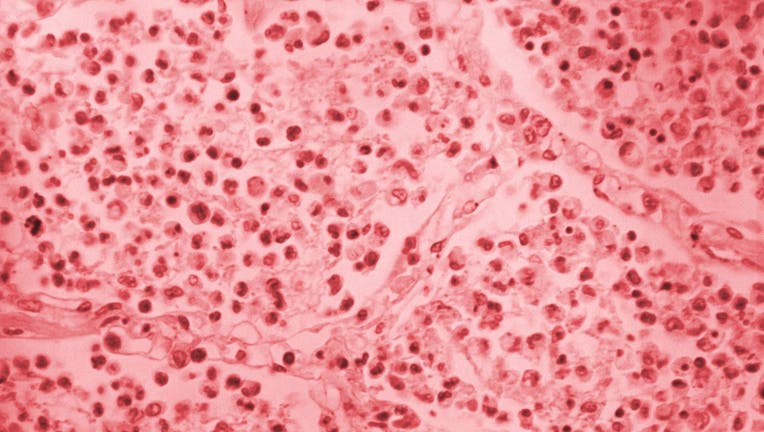
Photomicrograph of a lung tissue biopsy from a patient with Legionnaires disease shows intra-alveolar exudate composed of macrophages and polymorphonuclear (PMN) leukocytes, 1978. Image courtesy CDC. (Photo by Smith Collection/Gado/Getty Images)
NEW YORK - The New York City Health Department is expanding its outreach efforts in the South Bronx as health officials continue investigating a community cluster of Legionnaires' disease.
What we know:
Outreach has been widened to include ZIP codes 10455 and 10459 after cases were identified within a few blocks of the primary investigation zone in Melrose and Morrisania (ZIP codes 10451 and 10456).
To date, 19 people have tested positive in connection with the cluster. Of those cases, 11 patients have been discharged from hospitals, four remain hospitalized, two did not require hospitalization, and two deaths have been recorded since the investigation began.
Environmental health teams are testing area cooling towers—the likely source of the Legionella bacteria—and ordering immediate cleaning and disinfection for any system that tests positive. Health officials emphasize that tap water remains safe to drink, bathe, and cook with, and home air conditioners do not pose a risk.
Why you should care:
Legionnaires' disease is a non-contagious type of pneumonia caused by breathing in mist containing Legionella bacteria. While the overall risk of contracting the illness remains low, early diagnosis is critical because it can be effectively treated with antibiotics.
Anyone who lives, works, or has visited ZIP codes 10451, 10455, 10456, or 10459 since late August and develops flu-like symptoms—such as fever, chills, cough, muscle aches, or shortness of breath—is urged to contact a doctor immediately. Assistance finding medical care is available by calling 311 or 844-NYC-4NYC regardless of insurance or immigration status.
What's next:
The Health Department will host a virtual town hall for residents across the four affected ZIP codes on Tuesday, Sept. 22, at 6 p.m. to discuss the investigation and answer community questions.
The Source: This article was written using information provided by the New York City Department of Health and Mental Hygiene.