

New blood test detects aggressive prostate cancer more accurately than PSA, study finds
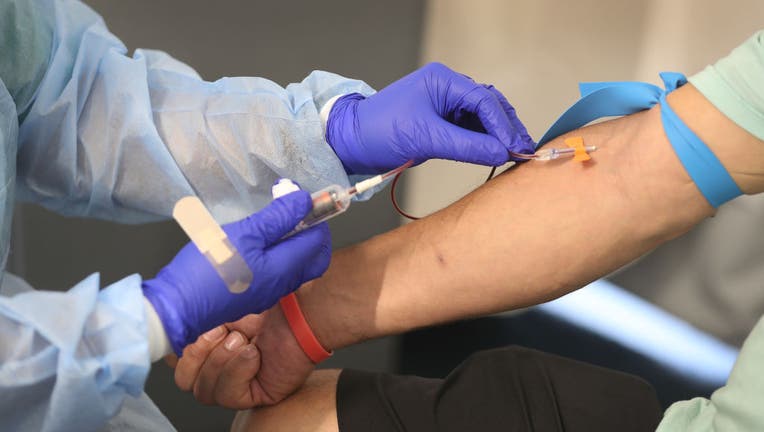
(Photo by Joe Raedle/Getty Images)
A new blood test may improve the early detection of high-risk prostate cancer, according to new research.
Known as Stockholm3, the test outperformed the traditional prostate-specific antigen (PSA) blood test in a recent clinical trial.
Dig deeper:
The study, published in the Annals of Internal Medicine, followed more than 12,000 men between the ages of 50 and 74, most of whom were Swedish or European. Participants received both the PSA and Stockholm3 tests and were monitored over a two-year period.
RELATED: Tyler Mane, X-Men star and former wrestler, reveals breast cancer diagnosis
During the study, 443 men were diagnosed with aggressive prostate cancer. Researchers found that Stockholm3 identified 90% of those cases, while the PSA test detected 74%.
The investigators also reported that Stockholm3 missed "significantly fewer" aggressive cancers than PSA testing. Both tests produced a similar number of false positives, meaning they classified roughly the same number of men as high-risk when they did not have aggressive disease, according to a press release.

Passengers celebrate 2-year-old's cancer-free status
Southwest flight attendants made a very special announcement on a recent flight between California and New York: 2-year-old Cruz, who'd been battling a rare form of cancer, is now cancer-free. The toddler went home with a pile of napkins filled with words of encouragement from his fellow passengers.
What they're saying:
Thorgerdur Palsdottir, a researcher in the Department of Medical Epidemiology and Biostatistics at Sweden's Karolinska Institutet, said one of the biggest challenges in prostate cancer screening is determining which cases are "truly dangerous."
"Our results show that Stockholm3 identifies significantly more aggressive cancer cases than PSA without increasing the number of unnecessary follow-ups," she said.
"These results point toward a potential change in how prostate cancer screening can be conducted," the researcher added. "A more precise blood test could enable earlier detection of aggressive disease while reducing the number of unnecessary follow-up examinations and procedures."
RELATED: Foster Sylvers, former child star of The Sylvers, dies at 64: reports
Study co-author Hari Vigneswaran, chief medical officer of A3P Biomedical, which developed Stockholm3, described the findings as "promising" in an interview with Fox News Digital.
He noted that PSA testing has been the standard approach to prostate cancer screening since the 1990s despite its "well-documented limitations."
"It leads to invasive and costly follow-up testing, contributes to over-diagnosis of non-aggressive cancers and, most importantly, it misses a substantial share of aggressive disease," Vigneswaran said.
Why you should care:
According to Vigneswaran, detecting aggressive prostate cancer before it spreads is critical, as the five-year survival rate is nearly 100% when the disease remains confined to the prostate.
He also pointed to National Cancer Institute SEER data showing that metastatic prostate cancer cases have increased over the past decade, suggesting that "we have not improved early detection of the aggressive, curable disease that screening is meant to catch."
"The goal of screening is to find the cancers that need treatment while they are still curable, without raising the number of men who screen positive but don’t have aggressive disease," he said.
Dig deeper:
Researchers also said the Stockholm3 test could reduce the number of unnecessary MRIs and biopsies performed during the diagnostic process.
The study has some limitations. Vigneswaran emphasized that Stockholm3 is still an investigational device and is not currently available for sale in the United States.
While the blood test estimates a man's likelihood of having aggressive prostate cancer, a biopsy remains the definitive method for confirming the diagnosis.
A3P Biomedical plans to pursue FDA approval for Stockholm3 as a routine screening tool and will "generate the evidence needed to support that pathway, including U.S. data," Vigneswaran said.
The Source: The Associated Press contributed to this report. The information in this story comes from a study published in the Annals of Internal Medicine by researchers at Sweden's Karolinska Institutet, which evaluated the Stockholm3 blood test in more than 12,000 men. This story was reported from Los Angeles.