

Part of stray SpaceX rocket crashes into moon as predicted

Piece of SpaceX rocket will soon crash into the moon
A large piece of a SpaceX rocket will likely make a crash landing this week — but it is not expected to smash into Earth soon. Instead, the rocket’s upper stage will collide with the moon. On Wednesday, the rocket’s upper stage is expected to slam into the moon near Einstein Crater with the force of three tons of TNT. LiveNOW’s Shawna Khalafi is speaking with Dr. Ken Kremer with Space UpClose as we are just hours away from impact.
Part of a SpaceX rocket slammed into the moon as predicted on Wednesday, a year after it started drifting off course.
Scientists say no one was able to see the actual collision, but a telescope in Chile spotted the likely debris plume, and other astronomers have found signs of the crash.
SpaceX rocket crashes into moon
By the numbers:
The Falcon rocket’s upper stage, a cylinder more than 40 feet long, crashed into the moon at 5,400-mph. The anticipated crash site was a dusty, barren patch near Einstein Crater on the moon’s sunlit western limb. That location is especially difficult to observe from Earth.
MORE: Used SpaceX rocket will soon slam into the moon, but not on purpose
What they're saying:
"There’s no doubt in my mind" that the rocket "is now in teeny, little pieces scattered over the moon near Einstein Crater," retired astrophysicist Jonathan McDowell told The Associated Press.
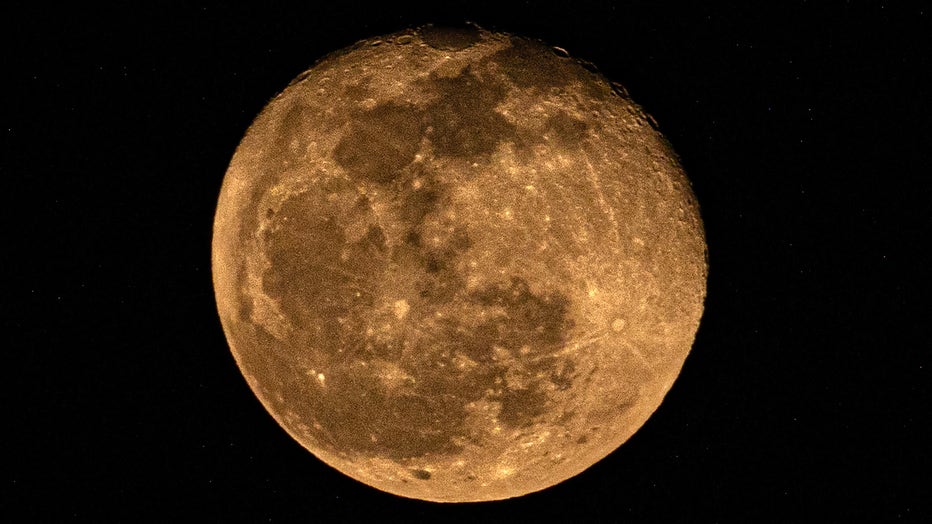
FILE: The moon rises in the night sky over Surabaya on July 31, 2026 in Surabaya, Indonesia. (Photo by Robertus Pudyanto/Getty Images)
SpaceX’s Julianna Scheiman said the crash was a result of solar activity mixed with gravity, which accidentally put it on a collision course with the moon.
What's next:
NASA’s Lunar Reconnaissance Orbiter will have to fly over the crash scene and send back photos of the impact crater to confirm the collision. That won’t happen before next week.
SpaceX’s Scheiman said the company is working with NASA to avoid future wrecks.
The backstory:
The Falcon rocket that crashed launched two private lunar landers from Cape Canaveral on Jan. 15, 2025. It ended up adrift after putting Firefly Aerospace’s Blue Ghost and ispace’s Resilience on course for the moon. Resilience wrecked, but Blue Ghost successfully touched down, becoming the first private spacecraft to do so.
Lunar litter a growing problem
Dig deeper:
This week’s crash is yet another instance of lunar litter, which many say could get worse as more and more rockets float in space and the U.S. and China race to put astronauts back on the moon.
In 2022, a Chinese rocket unintentionally hit the moon following a lunar mission, and many more stray rocket pieces likely struck the moon in decades past without scientists’ knowledge.
MORE: Antarctica's 'hummingbird' revealed in stunning new NASA radar
The moon is the new go-to destination in space, with NASA envisioning a stampede of robotic craft over the next several years to form the foundation for a sustainable lunar base. Elon Musk’s SpaceX and Jeff Bezos’ Blue Origin will provide the lunar landers for NASA’s Artemis astronauts.
Musk’s Starship is making steady progress in test flights from Texas. Bezos’ Blue Moon lander has yet to launch. One or both landers will take part in next year’s Artemis III, a docking rehearsal in orbit around Earth. A lunar touchdown by astronauts — the first since NASA’s Apollo moonshots — could follow as soon as 2028.
The Source: This article includes information from The Associated Press and previous FOX Local reporting.