

Flock cameras must be pulled from Florida state roads within 30 days, DeSantis orders
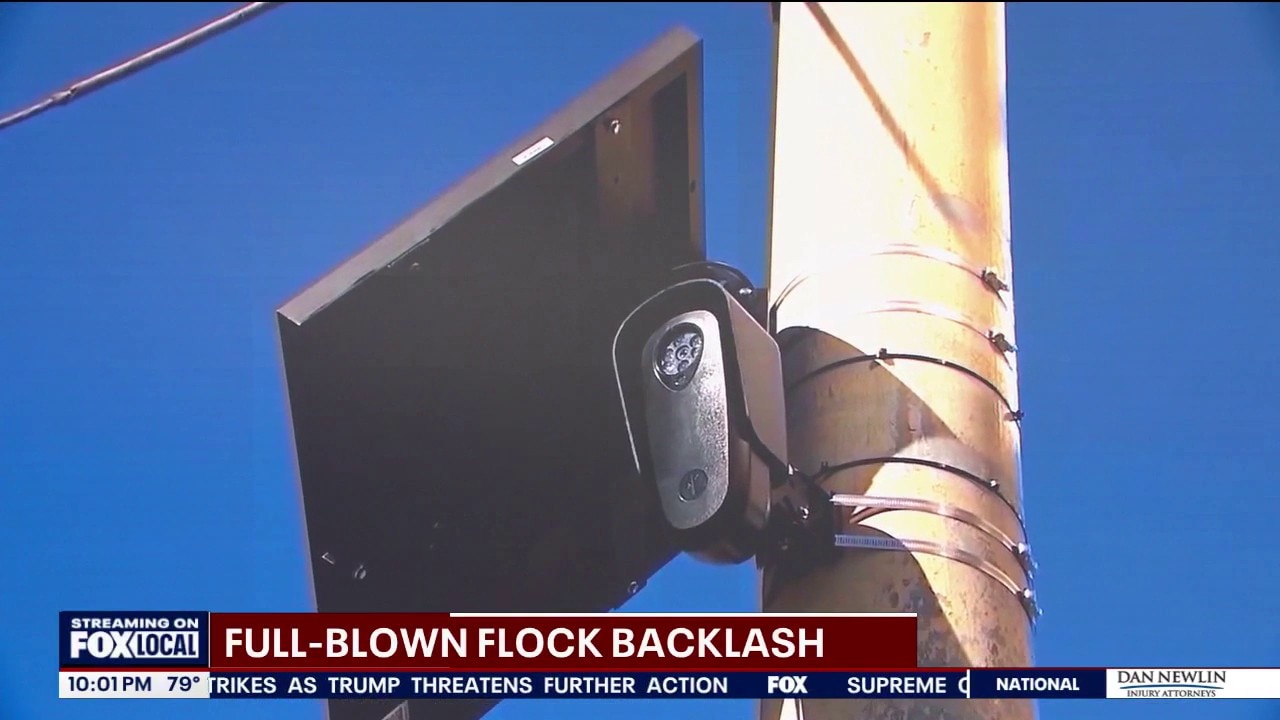
Central Florida agencies pull Flock cameras after state orders removal from highways
Law enforcement agencies and local governments across Central Florida are moving quickly to shut down or remove automated license plate readers after the Florida Department of Transportation ordered the devices removed from state highway rights-of-way.
ORLANDO, Fla. - Florida transportation officials are ordering local law enforcement agencies to remove automated license plate readers from state highway rights of way, citing privacy concerns, reports of misuse and the rapid expansion of surveillance technology.
The Florida Department of Transportation said in a memorandum released Monday that it is revoking existing approvals for automated license plate recognition systems, or ALPRs, installed by local agencies along roads in the State Highway System.
Flock Safety operates one of the nation's largest license plate reader networks, though several other companies also provide the technology.
When must cameras be taken down?
Timeline:
Agencies have 30 days to remove the devices. FDOT said it will remove any that remain after the deadline and will stop approving future requests to install license plate readers within state highway rights of way.
The department said the "exponential increase" in deployments, along with concerns about misuse, data privacy and surveillance, warranted immediate action.
Debate shifts to Tallahassee
What they're saying:
The move comes as Gov. Ron DeSantis and lawmakers around the country raise questions about how increasingly sophisticated camera networks and artificial intelligence are being used to track vehicles.
"I think it's out of control," DeSantis said recently when asked about license plate readers.
DeSantis said he supports giving law enforcement tools to investigate crimes but does not want Florida to become a "surveillance state."
DeSantis said the issue should be addressed by the Legislature and again called for an artificial intelligence bill of rights.
"I think people are right to be concerned," DeSantis said.
Florida Democratic Party Chair Nikki Fried criticized DeSantis and Republican leaders, saying the technology was allowed to spread without sufficient safeguards.
The debate is likely to continue as lawmakers weigh law enforcement's use of the technology against concerns about privacy and government surveillance.
Police comply but say cameras help solve crimes
The other side:
Automated license plate readers photograph passing vehicles and collect information including license plate numbers and other vehicle details. Law enforcement agencies can search the data to locate suspects, stolen vehicles or missing people.
Florida law enforcement agencies have repeatedly credited the cameras with helping solve cases.
Titusville police said license plate readers helped locate a suspect accused of shooting and killing his former wife in Volusia County. Marion County authorities also said the cameras helped locate a 13-year-old girl who was the subject of an Amber Alert.
Officers accused of misusing databases
Dig deeper:
Concerns have intensified following several Florida cases involving officers accused of accessing license plate databases for personal reasons.
In Haines City, an officer was arrested after investigators alleged he searched Flock data for his estranged wife's vehicle more than 700 times between September 2024 and June 2026.
A former Sumter County detective was also fired and charged after investigators alleged she used Flock and other databases to gather information about her husband's former wife.
Other Florida officers have faced accusations of using license plate readers to track former romantic partners or people connected to them.
Privacy advocates say the known cases may represent only a fraction of improper searches because some misuse may never be discovered.
Flock adds new safeguards
What Flock Says:
Flock founder and CEO Garrett Langley has argued that stronger safeguards, rather than outright bans, are the better approach.
"When I think about legislation that calls for an outright ban, that's like banning vehicles," Langley said.
Flock has announced several changes aimed at detecting and limiting misuse.
The company is making its Audit Assistance system mandatory for law enforcement customers. The system flags suspicious activity, including repeated searches for the same plate or searches conducted while an officer is off duty.
Flock said users flagged for potential misuse can be automatically locked out while their activity is reviewed.
By the end of the year, most searches will also require a case code tying them to an investigation. Emergency searches can bypass that requirement but will be flagged for review.
Flock is also reducing its default data retention period from 30 days to seven days, though agencies can choose longer periods.
"We are now making this accountability system mandatory for every customer," Langley said.
Privacy advocates say those steps do not address the broader concern that widespread camera networks can create a searchable record of where people travel.
FOX 35 has reached out to Flock Safety for a statement on the FDOT memorandum and we are awaiting a response.
What's next:
For now, locally operated license plate readers placed within Florida's state highway rights of way must be removed within 30 days, and FDOT says it will no longer approve new installations.
The Source: This story was written based on a memorandum released by the Florida Department of Transportation, previous reporting by FOX 35 News, public response from law enforcement agencies, and Flock founder and CEO Garrett Langley.